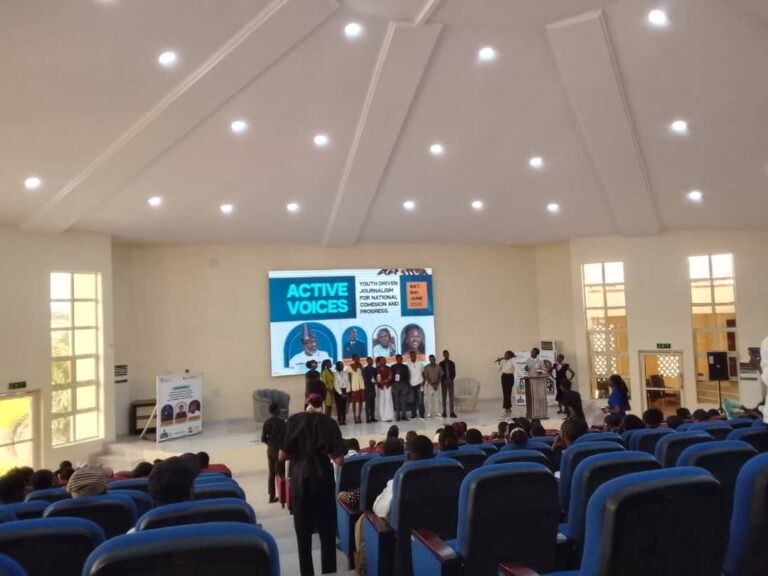
On Saturday, 6th of June, 2026, the Association of Campus Journalists, Obafemi Awolowo University(ACJ’OAU) organised the 2026 edition of its International Campus Journalism Conference (ICJC) which took place at the ICT main Conference Hall in OAU.
The conference, which was themed Active Voices: Youth Driven Journalism for National Cohesion and Progress, brought together student journalists and media voices from different tertiary institutions in Nigeria, including delegates from the University of Ibadan, Olabisi Onabanjo University, Osun State University, and the University of Ilorin, among others. It was a full day of conversations, panels, goodwill messages, and reflections on contemporary journalism.
Opening address
The conference opened with the rendition of various anthems and the opening address of the president of ACJ’OAU, Ms Esther Olatimehin. Ms Esther stressed the responsibility of young journalists in shaping those narratives that build the society.
She further emphasised that Campus Journalists that student journalists are not just passive observers but active participants in society. ‘Today, we gather not only to discuss journalism but also to explore its power as a tool for social progress,’ she added.
Keynote Speech
The keynote address was then delivered via a pre-recorded message by Professor Laolu Akande, who apologised for not being physically present but appreciated the invitation. Laolu Akande, who is a communication expert with over 30 years of experience in journalism, media, and public relations, wasted no time in emphasising the role of journalism as the backbone of Democracy.
He noted that when journalism fails, misinformation fills the gap, and society suffers the consequences and encouraged journalists not to be swayed by the falling state of society
“The moral decline happening today in Nigeria that is facing the country today should not affect journalism. As Campus Journalists, you have a huge responsibility in ensuring the greatness of the future of Nigeria. The digital age gives access to young voices who are willing to shape national discourse”.
He further stressed the need for Campus Journalists to build credible platforms rather than being driven by virality.
”As a journalist, you have a commitment to public interest. Journalists should not be caught up in the virality race but rather they should pursue a platform of credibility. Some of the most important stories are ones most people are not paying attention to”.
He also listed key expectations for youth-driven journalism, including factual reporting, amplifying underrepresented voices, accountability journalism, solution-based reporting, civic participation, and using digital tools responsibly.
Importantly, he also highlighted the need for young people to be more actively involved in nation-building.
” Even if you as a young person says you are not interested in politics, politics will always be interested in you and will affect everything around you and so we need young people talking and being involved in shaping the narrative. Citizenship is not a spectator’s position but one of active contribution and the journalist is important for that”.
Panel sessions
Next up came the first panel session which was anchored by Jesutomiwo Adebumowa, President of UCJ-UI, and was themed ‘From Campus Newsrooms to National Influence: Preparing Young Journalists for the Professional Media Space.’ Panellists included Faith Alofe (Journalist, multimedia storyteller, and correspondent at PUNCH Newspapers) and David Olatunji, Editor-in-Chief of The Lagos Voice, representing Hassan Abdulsalam, award-winning Nigerian Multimedia Sports Journalist, Media Relations Specialist, and Original Media Expert.
The discussion focused on the journey from campus journalism into mainstream media and the various things that lie on that path of transitioning as well as strategies and tips that can help CJs looking to make that transition.
The second panel session, tagged ‘Vibrant and Impactful Journalism as a Tool for Accountability, Civic Engagement, and National Development,’ was moderated by David Ogunlade, former Public Relations Officer of ACJ-OAU. Panellists included Segun Odunayo ( Chief Correspondent and Deputy Head of Programme at The Punch Newspaper), Boluwatife Adedokun, a Nigerian Journalist, Fact-checker, and Founder of Harbinger; and Caleb Ijoma, the Executive Director of Roundcheck.
The discussion revolved around the idea that journalism is about impact and accountability, not money and how making an impact does not require a big stage—you can start from where you are. It was explained that sometimes people undermine the role of journalism, but the role remains important because they give society a voice.
Conclusion
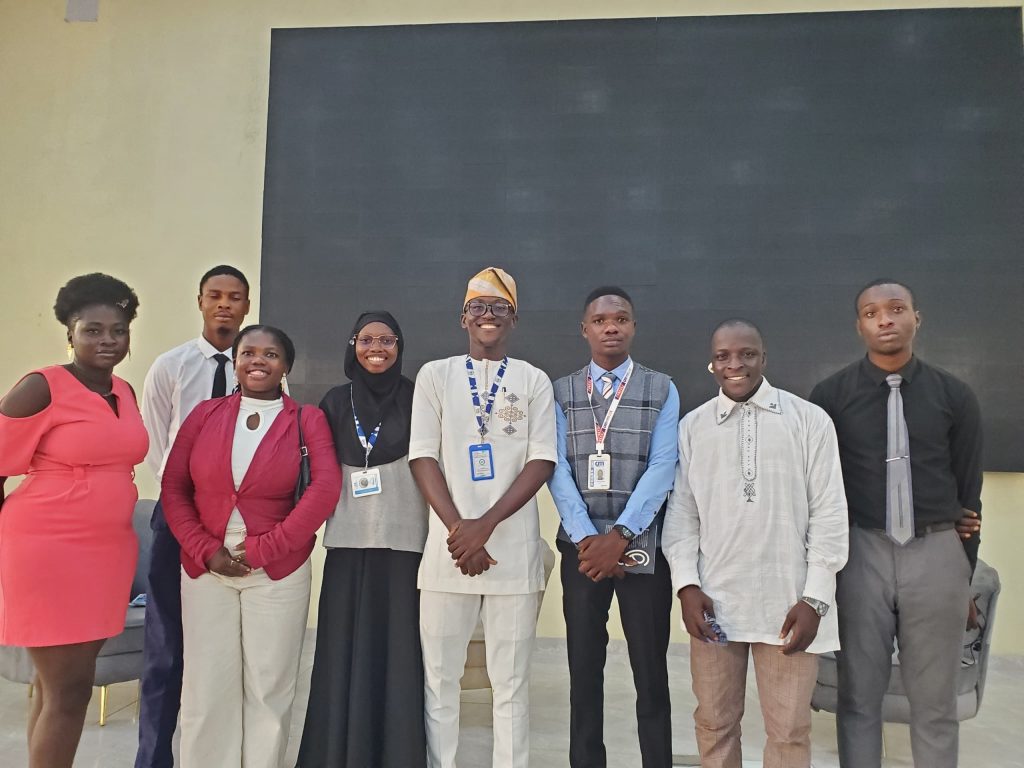
After this came the goodwill messages from the various delegates present and the winners of the 4th edition of the Adejumo Kabir Essay Contest. The essay themed ‘NELFUND: Expanding Access or Creating Debt for Students’, saw Dalley Folahanmi emerge as the second runner-up, Kolade Akinniyi emerge as the first runner-up, and Muslim Adewale emerge as the winner. The prize money was ₦30,000 for the second runner-up, ₦50,000 for the first runner-up, and ₦100,000 for the winner.
Overall, the event reinforced the place of campus journalism as a training ground for ethical storytelling, accountability, and national development.