
By Adebayo Balqees Folayemi
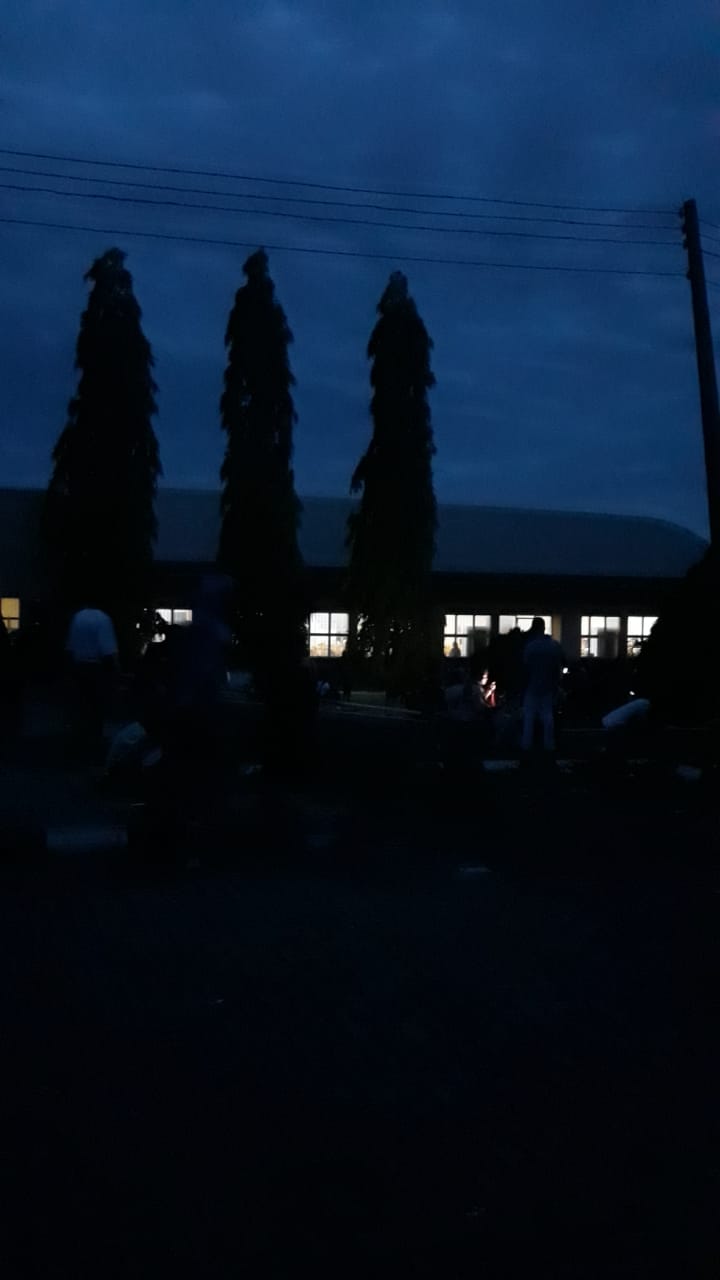
On Monday, June 1, 2026, University of Ibadan students arrived at the Distance Learning Centre (DLC) for their General Studies (GES) examinations, expecting a routine session. Instead, what was scheduled to last a few hours stretched deep into the night, with some students still at the centre after 9 PM.
The day’s examinations, including C-GST 212/GES 106, GES 301, C-UI-GES 108, and C-UI-GES 105, were meant to run across different time slots. However, the schedule collapsed early following what students attributed to a generator breakdown at the DLC.
Students scheduled for 8 AM and 4 PM sessions were left waiting for hours. Some did not begin their “morning” papers until past noon, while others who were meant to write in the evening only started around 8:30 PM and finished close to 9 PM.
Of the 22 students who responded to an online form, all confirmed participation in the examination session, while nearly all said the delay negatively affected their performance, focus, and comfort. On a scale of 1 to 5, respondents rated their sense of safety leaving the centre after dark at an average of 4.7, with 20 out of 22 describing the timing as inappropriate.
For many, the ordeal began long before they entered the examination hall.
A Classical Studies student who arrived by 7:50 AM said hunger and exhaustion set in long before the exam began. “By the time I was to write my paper, I was so hungry my legs were shaking. All the vendors had packed up, so I couldn’t even get a snack,” she said.
Another Communication and Language Arts student described being stranded for hours. “We were left in the sun and rain with no proper place to sit,” she said. One respondent simply described the experience as “traumatic.”
Inside the examination hall, students reported difficult conditions. One said the cold temperature made concentration difficult. “The weather was cold, and the AC and fan didn’t help. I couldn’t read properly. I was freezing,” she said.
Another student said noise and tension outside the hall disrupted focus. “Hearing shouts outside made us think something was happening. I couldn’t concentrate,” he said.
A Marketing and Consumer Studies student added: “Fear of time and the noise outside made most of us think we were being attacked.”
The academic impact was significant for many.
Ebube, a Psychology student who uses crutches, said the conditions affected both his health and performance. “I kept thinking about how I would get home. I was also worried about food and my medication. I was too tired and forgot a lot of what I studied,” he said.
A Philosophy student was more direct: “Tell me why I would use 30 minutes for 120 questions.” Another added: “I was tired and just wanted to go home even if it meant doing rubbish in the exam.” One respondent simply said, “This session nah scam.”
Students also reported issues with invigilators. A Psychology student said officials announced a sudden time shortage and ended some exams prematurely. “We were not prepared for a 10-minute cut. It disrupted everything,” she said.
Others complained about poor conduct during the exam. “The invigilators were talking loudly. It made it hard to concentrate,” one student said. Another described them as “hostile and unprofessional.”
When the exams finally ended, some as late as 9 PM, a new challenge began: getting home safely.
One student said transport was difficult to find. “I had to trek after the exam. I woke up the next day with extreme body pains,” she said.
Another described chaos at the gate. “Students were pushing to get buses. I almost fell trying to enter one,” he said. The Students’ Union bus, according to respondents, was present but unused as students struggled to find alternatives.
Elizabeth, a Linguistics student, said she had to book a ride and wait for a long time. “It was stressful and unsafe getting home,” she said.
Others reported aggressive drivers and high transport stress. A Religious Studies student said he only got home around 10 PM. “There was no transport from the UI gate. It was risky,” he said.
Even after returning home, the effects lingered.
Several students reported headaches, body pains, and exhaustion. “I woke up with extreme body pains,” one said. Another added: “I’ve had a nonstop headache since the exam.”
For students with examinations the following morning, the timing proved even more disruptive.
One respondent said, “I couldn’t rest or read after getting home. I didn’t eat all day, and I couldn’t prepare for my next exam.”
Ebube added, “I kept sleeping all day. I had to increase my pain medication. I couldn’t study at all.”
Most respondents said the examinations should have been rescheduled rather than pushed late into the night.
“The exam should have been moved,” one student said. “The second paper should have been cancelled for safety reasons,” another added.
One respondent summed it up: “The safety of students should not be compromised for academic schedules.”
Another added: “I saw staff eating while students were hungry. Most of us expected to finish quickly and go home.”
By the end of the day, students described a shared experience of hunger, fear, exhaustion, poor coordination, and unsafe travel conditions.
For many, the challenge was no longer just writing an examination. It was enduring the conditions under which it was written.
What was meant to be a routine academic exercise became a test of endurance. Students arrived in the morning and left after dark. They sat through hours of uncertainty, wrote under difficult conditions, struggled to get home, and woke up to headaches, body pains, and the realisation that their next exams had already been compromised.
For the 22 students who shared their experiences, the message was clear: the centre for general studies had not done as well as would be expected. And as faculty examinations began the following morning, the question that lingered was not just about grades, but about how much the institution truly values the welfare of the students it exists to serve.

One Comment on ““We Wrote from Dusk to Dark”: Students Recount Late-Night GES Examination Sessions at DLC”