
By: Okeowo Hephzibah Ọpẹ́yẹmí
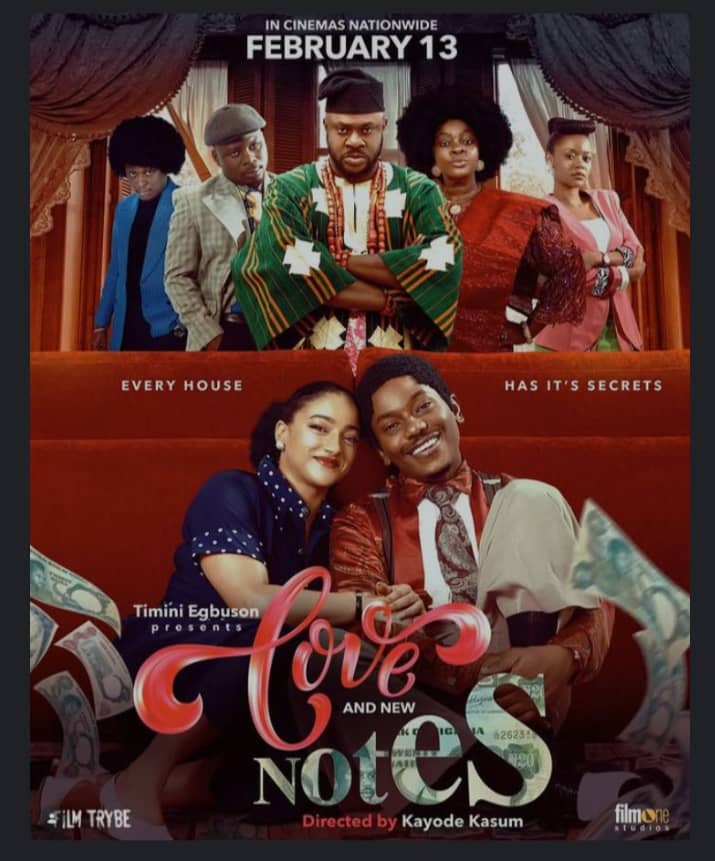
Some films entertain. Others hold a mirror to society: Love and New Notes does both. Directed by Kayode Kasum, written by Stephen Okonkwo, and produced by Timini Egbuson and Muyiwa Idowu, the film revisits Nigeria’s 1984 currency exchange under the military government of General Muhammadu Buhari. But rather than simply recreating history, it tells a story that feels remarkably familiar in present-day Nigeria.
On the surface, Love and New Notes is a romantic drama. Beneath the romance, however, lies a thoughtful exploration of greed, desperation, love, cultural identity and the difficult choices people make when survival is at stake. It reminds viewers that history may wear a different face, but it often tells the same story.
The film introduces Boma (Timini Egbuson), a young man desperate to “hammer” and escape poverty, often through questionable means. His fiancée, Okpara( Sophie Alakija), is his complete opposite. An accountant whose honesty and integrity constantly challenge Boma’s pursuit of quick wealth.
Their relationship is more than a love story; it is a clash between two value systems. Yet the film wisely refuses to reduce Boma to a one-dimensional character. Beneath his flaws is a man whose love is sincere. One of the film’s most memorable moments comes when Okpara reveals she is pregnant.
Her words, “I’m pregnant,” are gently corrected by Boma’s heartfelt response:
“No… we are pregnant.”
It is a brief exchange, but it captures the emotional heart of the film. For a moment, viewers see beyond Boma’s questionable decisions and recognise a man driven as much by love as by ambition. The film reminds us that people are rarely entirely good or entirely bad.
Later, Boma reflects on his childhood. His father valued education and ensured his children went to school, yet the family remained trapped in poverty. The film leaves viewers with an important question: Did hardship shape Boma’s choices, or did his desire for quick success outweigh his integrity?
That ambiguity reflects a reality many Nigerians still grapple with today.
The story takes a dramatic turn when a radio announcement informs citizens that the old currency notes will be replaced. Panic spreads almost immediately. A frustrated driver’s repeated question in Yoruba
“Ṣé ìyẹn l’òtún kan?”
(Is that the next thing?) captures the uncertainty ordinary Nigerians feel whenever major government policies are introduced.
Watching these scenes, it is almost impossible not to remember the 2023 naira redesign policy. Long queues, cash scarcity, uncertainty, and frustration became everyday experiences for millions of Nigerians. The colours of the notes changed, but the suffering did not. Without making loud political statements, the film quietly suggests that governments may redesign currencies, but they rarely redesign the realities ordinary Nigerians live with.
Another strength of the film is its portrayal of desperation. One woman willingly sells her car after Boma deceives her with what he claims are newly introduced currency notes. She never verifies his claims because desperation often convinces people faster than evidence does. The scene is uncomfortable because it reflects a universal truth: people do not always make poor decisions because they lack intelligence. Sometimes they simply want hope badly enough to believe the first person who offers it.
The Gbadamosi household provides the film’s strongest commentary on greed and human desire. When Okpara visits Mrs Gbadamosi’s mansion to count an enormous amount of hidden cash, viewers are immediately drawn into an atmosphere of mystery. The silent hallways, furniture covered in white sheets, and strange spiritual encounters create suspense without relying on cheap scares. Kayode Kasum allows the atmosphere to build naturally, making the tension far more effective.
The hidden room overflowing with cash becomes one of the film’s most powerful images. It symbolises more than wealth; it represents fear, greed, and distrust. Ironically, the fortune everyone desperately wants will eventually lose much of its value after the currency exchange.
The message is subtle but powerful: money only has value because society gives it value. Love, integrity, and humanity are far more difficult to devalue.
The film also explores the emotional burden of motherhood through Mrs Gbadamosi (Eniola Badmus). Unable to have children and weighed down by societal expectations, she persuades her maid, Ife (Toluwani George), to bear a child with her husband, Mr Gbadamosi (Odunlade Adekola). What begins as a sacrifice slowly transforms into jealousy, betrayal, and tragedy. Viewed from today’s perspective, the storyline raises interesting questions. Modern reproductive options such as surrogacy might have offered a different path. Instead, the film reflects a time when cultural expectations left women with painfully limited choices.
Beyond its social commentary, Love and New Notes is deeply rooted in Yoruba culture. Traditional sculptures, ancestral beliefs, spiritual encounters and family customs are woven naturally into the story, making culture part of the narrative rather than mere decoration. Whether viewers share those beliefs or not, they give the film authenticity and emotional depth.
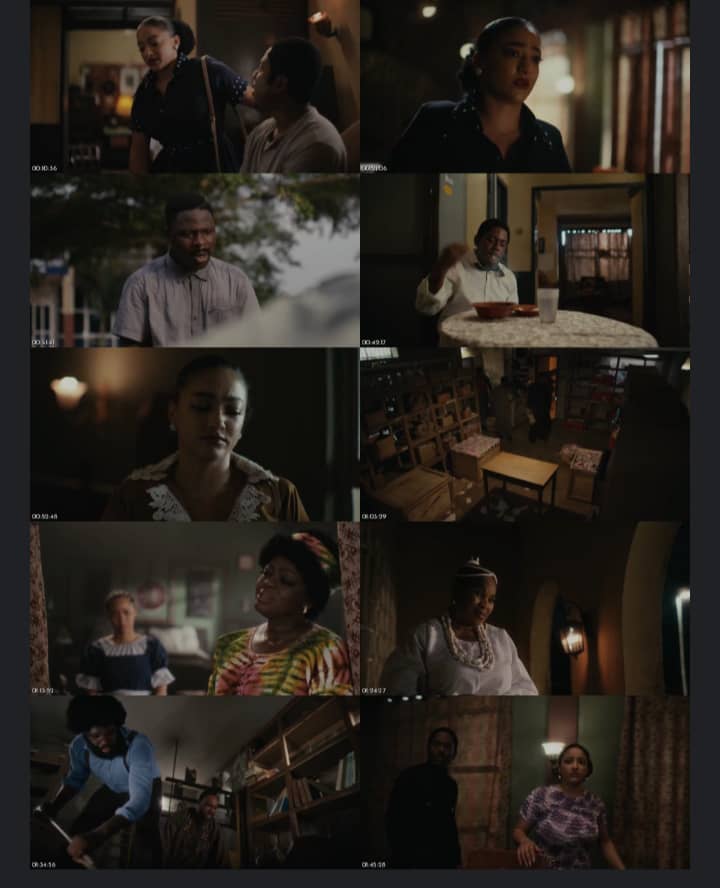
Visually, the production deserves praise. The costumes, hairstyles, vehicles, architecture, soundtrack and colour grading convincingly recreate 1980s Nigeria without feeling exaggerated. Every frame contributes to the illusion of stepping into another era.
Timini Egbuson delivers one of his strongest performances in recent years, balancing Boma’s charm, vulnerability and moral flaws with remarkable ease. Odunlade Adekola brings quiet strength to Mr Gbadamosi, while the performances of Eniola Badmus as Mrs Gbadamosi and the actress portraying Ife carry much of the film’s emotional weight.
The film is not without flaws. Its opening act moves more slowly than necessary, and a few supporting characters could have benefited from greater development. Some supernatural elements also leave questions that are never fully answered. Even so, these shortcomings do little to diminish the film’s impact. At its heart, Love and New Notes is not about old naira notes. It is about the choices people make when survival tests their values. Through love, greed, desperation, sacrifice and culture, the film reminds us that while currencies, governments and policies may change, the everyday struggles of ordinary Nigerians often remain the same.
Boma’s final words, “Money doesn’t save us. Love does,” perfectly capture the heart of the film. After all the chasing, betrayal, and bloodshed, they become more than a line of dialogue. They become the film’s lasting message.
Love and New Notes is more than a romantic drama. It is a mirror held up to Nigeria’s past and present, reminding us that while money may change hands and history may repeat itself, love, integrity, and humanity remain the values that truly endure.




Wow 😳😲
This is beautiful 😍, reading this actually interested me
I’d definitely watch the movie
It carries everything, it explained it all
This is really catching