By Okeowo Hephzibah Ọpẹ́yẹmí
Somewhere, someone is probably listening to Dolly Parton, while someone else is watching an old Yoruba movie and laughing at a scene they have seen more than once. And somewhere in between the drums, the Amapiano and the endless stream of new music and movies competing for our attention, there are people whose names take us back.
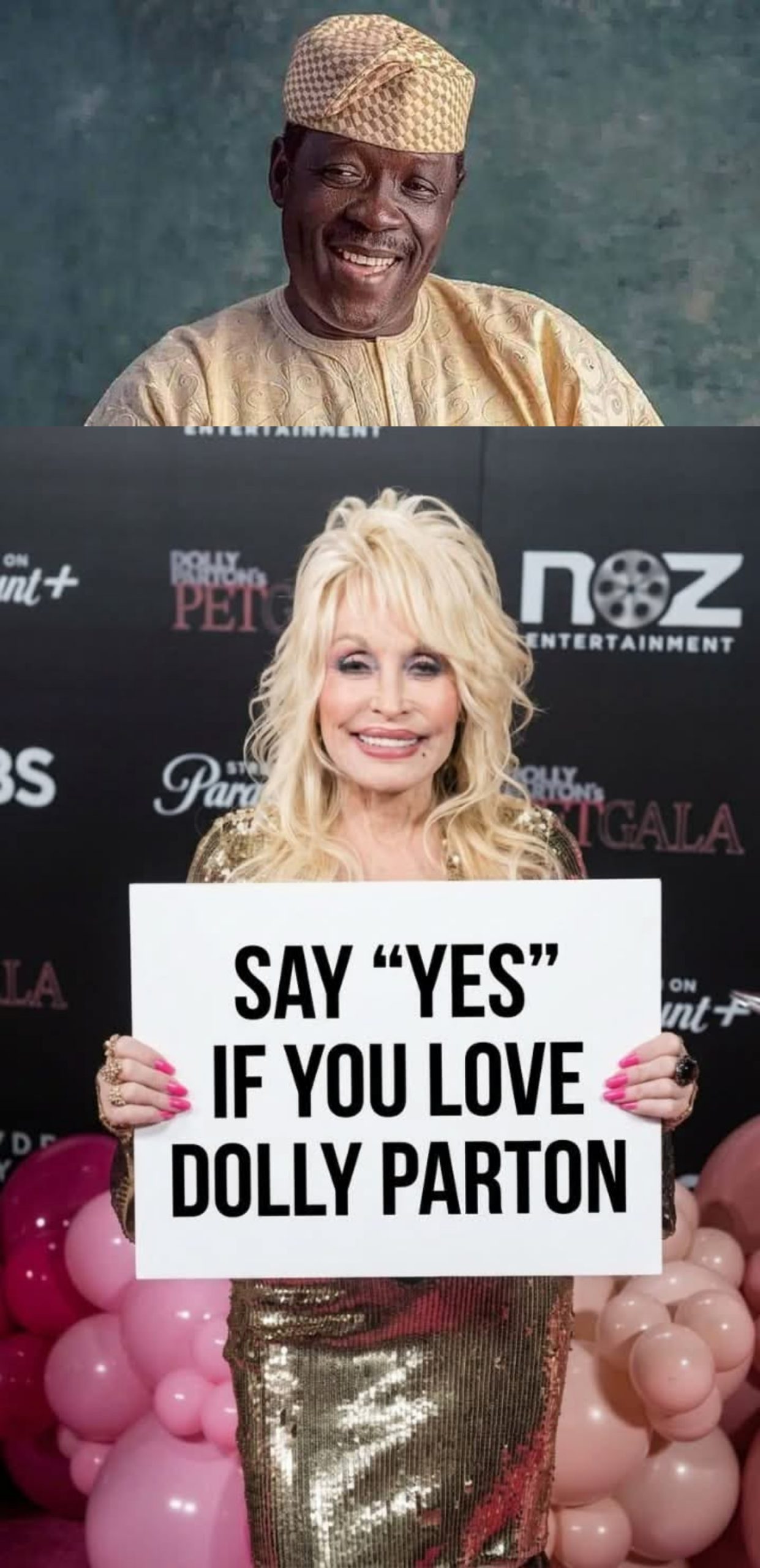
Taiwo Hassan, popularly known as Ogogo, and Dolly Parton are two of them. Putting their names together might sound strange and funny. A Yoruba actor from Nigeria and an American country music icon. Different countries, industries, audiences and stories. Yet both understood something about entertainment that goes beyond simply being famous: they knew how to make people remember them.
Ogogo’s story began long before the fame. Born in Ilaro, Ogun State, in 1959, he later moved to Lagos and trained as an automobile mechanic at Yaba Technical College. He even worked with the Lagos State Water Corporation while nurturing his interest in theatre. His acting career goes way back to the early 1980s, when he trained under veteran theatre practitioner Awo Ademola Fagbemi and started with stage performances. It was a journey that eventually took him from theatre to home videos and, later, the cinema.
His role in Owo Blow helped push him into the national spotlight and earned him the 1997 THEMA Best Actor award. From there, he became one of the recognisable faces of Yoruba cinema, spending about four decades acting, producing and telling stories deeply rooted in Yoruba culture. His later appearance as Alaafin Ademuyiwa in Kunle Afolayan’s Aníkúlápó also introduced him to a new generation of viewers, earning him a 2023 AMVCA nomination for Best Supporting Actor.
For many Nigerians, especially those who grew up with Yoruba films, Ogogo was not just an actor. He was part of the package. The movies were part of childhood. The characters and the lines were part of the jokes. And the actors became familiar faces in homes where entertainment often meant gathering around the television and watching whatever movie was available.
Dolly Parton created that kind of familiarity in a completely different way. Born in Tennessee in 1946, Parton grew from a child performer into one of the most successful singer-songwriters in country music. Her career stretched across music, acting, writing, business and philanthropy, with songwriting remaining the centre of it all.
Her name became attached to songs that travelled far beyond country music. She became the woman behind songs such as Jolene, 9 to 5 and I Will Always Love You. Her career also earned her 11 Grammy Awards and recognitions ranging from the Kennedy Centre Honours to the National Medal of Arts. Her humanitarian work also became a major part of her public identity, particularly through her children’s literacy programme.
She did not need a Nigerian television screen to become part of people’s memories. Her music, songwriting and films travelled. Even people who could not confidently call themselves country music fans knew Dolly Parton. Which is one of the interesting things about Parton’s career. She managed to make country music feel larger than its label. She wrote about love, hardship, dreams, family and ordinary life, and somehow those stories found people far beyond where they began.
Ogogo and Parton therefore leave behind different kinds of legacies. One gave audiences characters and stories they could see. The other gave audiences songs and stories they could hear. But both gave people something they could carry.
Maybe that is why their deaths feel particularly uncomfortable for people who grew up consuming their work. Because we rarely think about the age of the people who entertained us when we were young. We simply assume they will always be there. The films remain on our phones. The songs remain on streaming platforms. Old clips continue to circulate on social media. Someone discovers them for the first time, while another person is revisiting them for the hundredth.
Then suddenly comes the shocking news of the passing of the person behind the work. Ogogo died at 66 after battling cancer, while Parton died at 80 following a brief battle with cancer. Their deaths came from different corners of the world, but the news produced a strangely familiar feeling: another voice had gone quiet. Then suddenly, something that felt permanent becomes history.
For Ogogo, whose history is tied to a Nigerian entertainment industry where the way films are produced and the way audiences consume them have changed tremendously, social media has also changed how actors become famous. Yet the work of people from earlier generations continues to find its way back into conversations.
For Parton, the story is much the same. Music, the industry and the way people discover artistes have changed. But the songs remain, and so does the woman whose name became almost inseparable from the sound and culture she represented.
That is the interesting yet funny thing about entertainers: they can leave, but their work refuses to leave with them. A movie can outlive its actor, a song can outlive its singer, and a character can outlive the person who played it.
And years later, somebody who was not even born when that work was created can still discover it and say, “I like this.” Maybe that is the closest thing entertainment has to immortality. Not that the entertainer lives forever, but that something they created continues to find new people.
Ogogo and Dolly Parton may have occupied completely different corners of the entertainment world, but both left behind bodies of work that are larger than the moment in which they were created. And for people who encountered them while growing up, their passing carries another feeling. It is the feeling of realising that the people who populated their childhood are growing fewer. The people whose work made an ordinary afternoon less ordinary.
They grow up, move on to newer songs, movies and stars. Then death reminds them that while they were busy growing into the next generation, the people who entertained the previous one were growing older too.
Maybe that is what makes this moment worth pausing over. Not simply because two entertainers have died, but because two different parts of entertainment history have gone quiet.
Ogogo leaves behind about four decades of Yoruba theatre and Nollywood history. Dolly Parton leaves about seven decades of music, films, songwriting and humanitarian work.
And somewhere, somebody will press play, put on an old movie, hear a familiar voice or recognise a familiar face and, for a few minutes, return to a version of themselves that they thought they had forgotten.
That may be the real gift entertainers leave behind. They give us something to remember them by. And sometimes, without even knowing it, they give us something to remember ourselves by.