By Thanni-Balogun Esther
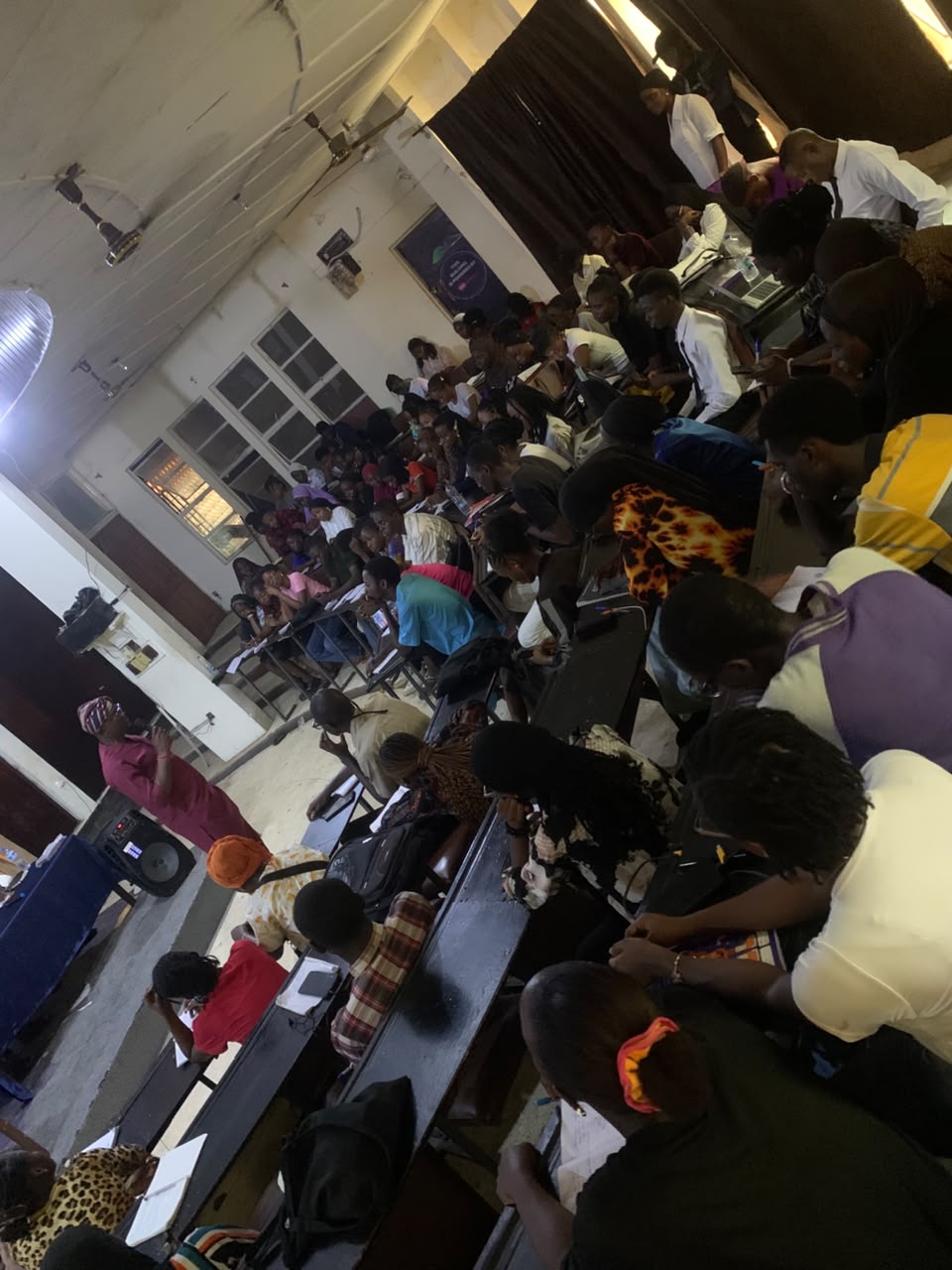
The University of Ibadan Campus Journalists (UCJ) held a three-day masterclass from Monday, 3 August, to Wednesday, 5 August, 2026, at the Student Representative Council (SRC) Chambers, Student Union Building (SUB), equipping campus journalists with practical skills in reporting, media law, ethics, feature writing, data journalism and the responsible use of artificial intelligence.
The training brought together participants for interactive sessions facilitated by experienced journalists and media professionals, with discussions centred on strengthening professionalism, ethical reporting and public-interest journalism.
Opening the programme, Mr Gbenga Oloniniran introduced participants to the fundamentals of journalism, describing it as the process of gathering, verifying, writing, editing and publishing information in the public interest.
He stressed that journalists are first and foremost fact-checkers and urged participants to prioritise accuracy, clarity and accountability in their work. “No story is worth your life,” he said, while encouraging participants to pursue stories responsibly and simplify their writing for readers.
Speaking on media law, Mr Yinka Adeniran examined legal issues affecting journalism, including defamation, copyright, intellectual property and the right to privacy. He warned participants against accepting inducements capable of compromising their objectivity and reminded them that journalists must understand the legal implications of their work.
“With great power comes great legal responsibility,” he said.
The second day featured sessions on journalism ethics, data journalism and feature writing.
Mr Wale Akinselure described ethics as the foundation of responsible journalism, urging participants to uphold accuracy, fairness, balance and confidentiality while resisting every form of gratification capable of influencing editorial judgement.
He concluded by encouraging participants to “build a reputation that money cannot buy.”
Delivering a session on data journalism, Mr Yusuf Nurudeen explained how data can help journalists discover, verify and explain stories more effectively. He encouraged participants to complement statistics with human experiences and reminded them that “numbers tell what, people tell why.”
He also introduced participants to public sources of data, including government budgets, election results, university reports and Freedom of Information requests, while cautioning against manipulating statistics to support preconceived narratives.
Speaking on feature and opinion writing, Mr Fatteh Hamid emphasised the importance of research, critical thinking and multiple sources in producing compelling stories. He distinguished feature writing from opinion writing and advised participants to avoid libellous expressions while ensuring their reports remain evidence-based.
The final day of the training focused on news reporting, artificial intelligence and responsible campus journalism.
Mr Boluwatife Akinyemi reaffirmed that campus journalism is real journalism and urged participants to verify every piece of information before publication. Speaking on artificial intelligence, he highlighted its usefulness in research, editing, transcription and translation but warned against overreliance on AI-generated content because of risks such as misinformation, hallucinations and plagiarism.
“AI assists. It never publishes alone,” he said.
Also speaking, Mr Gbenga Oyetola encouraged participants to develop strong news judgement, write balanced reports and verify information before publication, particularly in an era of increasing citizen journalism and social media reporting.
In the final session, Mr Alao Abiodun challenged participants to remain factual, objective and accountable in their reporting.
“We as campus journalists are the conscience of the students,” he said.
Throughout the three-day programme, participants engaged facilitators through interactive question-and-answer sessions, gaining practical insights into newsroom practices, media ethics and professional reporting.
In appreciation of their contributions to the training, the UCJ President, Adebumowa Jesutomiwo, presented awards to all the facilitators in recognition of their commitment to mentoring the next generation of campus journalists.
The masterclass concluded with participants better equipped with the knowledge, ethical foundations and practical skills required to practise responsible campus journalism and serve the public interest.