
By Adebayo Balqees Folayemi and Oladele Robiat
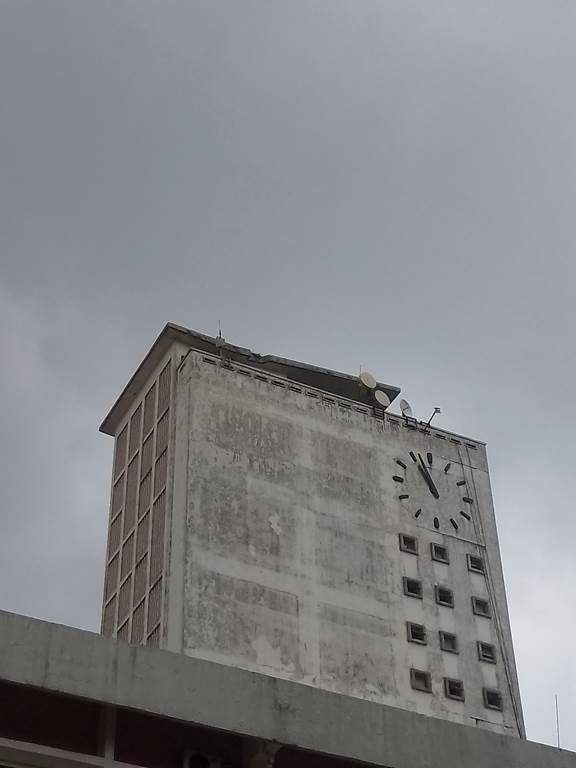
For years, the clock above the Tekena N. Tamuno Building has watched generations of students pass beneath it. Once a functional part of campus life, it now stands still, raising a simple question: why does a clock no longer keep time?
At the University of Ibadan, time is everywhere.
It is in the hurried footsteps of students racing to early morning lectures, in the sound of lecturers calling classes to order, and in the movement of workers beginning and ending another day on campus.
But above the Tekena N. Tamuno Building stands a clock that no longer participates in that rhythm.
Its hands have remained still for years.
For many students, the sight has become so familiar that it barely attracts attention anymore. Students walk beneath it, workers pass around the building, lecturers move in and out of the administrative offices, and campus life continues. Yet above them hangs a clock that no longer performs the simple task for which it was installed: telling time.
It is easy to overlook something that has always been there.
A working clock demands very little of its observer. One looks up, reads the time and moves on. Its usefulness is almost invisible because it fits so naturally into everyday life.
The clock at the Tekena N. Tamuno Building once occupied that place in the University’s daily rhythm.
Now, it has become a silent fixture of the campus landscape.
A Clock Above a Piece of History
The building itself carries a piece of the University’s history.
Now known as the Tekena N. Tamuno Building, it was formerly the Central Administration Building. It was later named after Emeritus Professor Tekena N. Tamuno, a historian, alumnus of the University and the first alumnus of the institution to become its Vice-Chancellor.
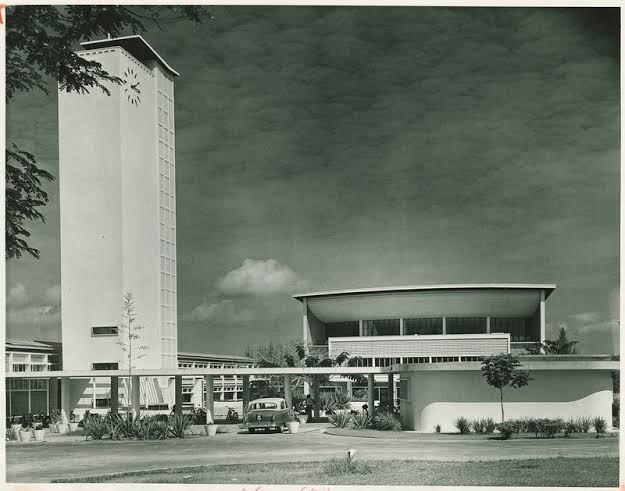
Tamuno served as Vice-Chancellor between 1975 and 1979.
His connection to the University extended beyond administration. In 1973, he co-edited The University of Ibadan, 1948–73: A History of the First Twenty-five Years, documenting the institution’s first quarter-century.
Today, a building bearing his name forms part of the University’s everyday landscape. Above it, the clock has quietly witnessed generations of students, lecturers and workers pass through the institution.
But while the building has continued to serve its purpose, the clock has not.
A History of Stopping and Starting
The clock’s troubles are not new.
A decade ago, UCJ had already written about the University’s clock tower as a “dead-clock tower,” questioning why a prominent landmark at the premier university had been allowed to remain non-functional.
Yet accounts from University staff members who have worked on campus for more than 16 years suggest that the story did not end there. They recalled that the clock had stopped previously but was later repaired and returned to working condition.
The accounts suggest that the clock’s present condition was not the result of one isolated breakdown. It had experienced problems before and had undergone repairs at different points.
The clock is battery-powered and, according to the staff members, requires a particularly large battery to operate.
But the battery was not the only challenge.
When Birds Became Part of the Problem
The strangest part of the clock’s story may have nothing to do with a conventional mechanical failure.
It has to do with birds.
According to the staff members, the clock’s chime attracted birds to the structure. Their presence around the clock could interfere with its hands, causing it to display a time different from the actual time.
One of the staff members explained:
“The chime attracted birds to the clock. When the birds came and perched there, their movement would affect the hands. You could set it correctly, but after some time, the birds would come again and the time would change.”
The problem, therefore, was not necessarily that the birds damaged the clock itself. Rather, their movement could physically displace the hands.
A clock that was supposed to show 3:00 could, after repeated interference, end up displaying an entirely different hour.
The result was a peculiar maintenance problem: the clock could be functioning, yet still fail at the basic task of accurately telling time.
Correcting it required more than simply leaving it alone.
Its hands had to be reset, while its large battery would eventually need to be replaced. According to the staff members, repeatedly restoring the clock became difficult to sustain when the same problem could return.
One staff member said:
“The clock uses a very big battery, so it also needs to be changed from time to time. If you repair it and set the time, then the birds come again and disturb the hands, you begin to wonder what is the point of continually repairing it.”
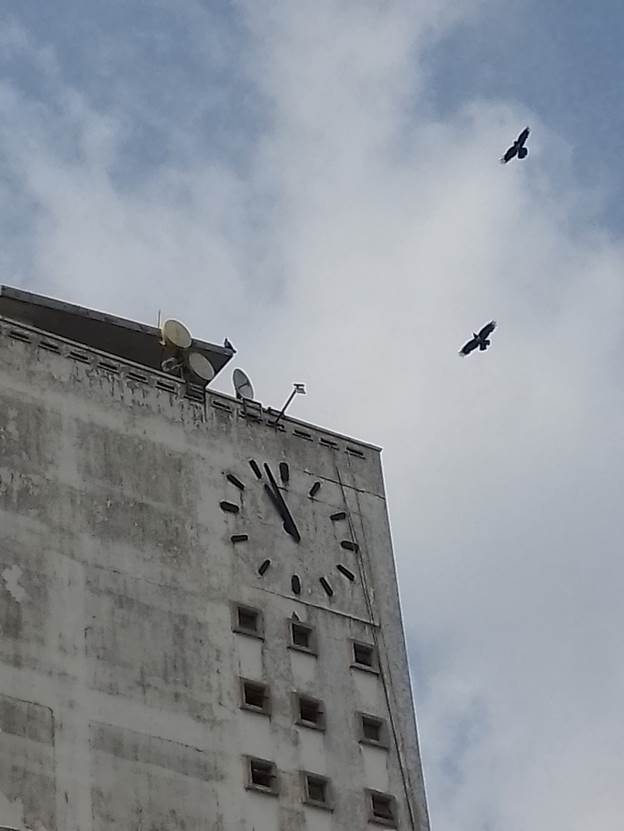
The explanation, however, comes from staff members familiar with the clock’s history and has not been independently confirmed by the University.
It Was Not Always Left to Stand
The clock’s story is not one of complete neglect from the beginning.
Staff members told UCJ that attempts had been made to repair it at different points.
A University staff member told UCJ that the clock was repaired during Professor Kayode O. Adebowale’s administration.
The exact date and details of that repair could not be independently established.
Alumni have also reportedly shown interest in restoring the clock.
According to the staff members, members of the University’s alumni community have made efforts at different points to get it working again. Their involvement suggests that, for some members of the University community, the clock represents more than a piece of equipment attached to a building.
It is part of the institution they remember.
Yet those efforts did not result in the clock remaining permanently functional.
The hands eventually stopped.
And they stayed that way.
When Broken Becomes Normal
For students who arrived at the University in recent years, a non-functioning clock is all they have known.
They have never had to depend on it for the time because, to them, it has never really been a clock in the practical sense.
It is simply there.
That may be the most striking part of its decline.
A broken facility attracts attention when it first stops working. People notice it, ask questions and expect something to be done. But when nothing changes for long enough, people adapt.
The broken thing becomes normal.
Students walk past it without looking.
Workers move beneath it without expecting it to tell them anything.
The stationary hands become part of the landscape.
Eventually, a question that should seem obvious begins to disappear:
Why does a clock no longer keep time?
Searching for an Answer
That was the question we sought to answer.
The search led to people who had spent years working around the University and could remember the clock when it was still functioning. Their accounts provided a history of repairs, batteries, birds and repeated attempts to keep the timepiece running.
But they could not answer every question.
We also attempted to establish the University’s official position on the clock and its maintenance.
The team was directed through the University’s administrative channels in search of an official who could provide information. However, it was unable to reach an official who could answer the questions specifically relating to the clock.
A staff member familiar with the University’s maintenance structure identified the Works and Maintenance Unit as the office responsible for such repairs. However, we were unable to obtain an official explanation from the unit specifically on the clock.
As a result, several questions remain unanswered.
When was the clock last repaired?
What exactly caused it to stop functioning in its present state?
How much would it cost to repair or replace it?
Who is currently responsible for maintaining it?
Has the University decided that maintaining it is no longer worthwhile?
And, perhaps most importantly, does the University intend to make it keep time again?
Why It Matters
It may be tempting to dismiss the matter.
After all, almost every student now carries a clock in their pocket.
Phones, laptops and wristwatches have made public clocks less essential than they once were.
But the issue is not simply whether students can find out the time without it.
They can.
The issue is that the clock was built to perform a basic, visible function, and it has remained unable to perform that function for years.
It is attached to one of the University’s prominent administrative buildings. It is part of the physical identity of the campus. It has been seen by generations of students and workers, and it has attracted enough attention in the past for alumni and others to attempt to restore it.
Its failure therefore raises questions beyond the movement of its hands.
It raises questions about maintenance, institutional memory and what happens when a familiar part of a university landscape gradually becomes invisible through neglect.
Perhaps the clock’s greatest irony is that it has spent years surrounded by people whose lives are governed by time while being unable to tell it.
Every morning, students still hurry to class.
Lecturers still keep appointments.
Workers still begin and end their days.
Semesters still start and finish.
Graduating students leave, and new ones arrive.
Time moves on.
Only the hands above the Tekena N. Tamuno Building do not.
For now, the clock remains where it has always been, looking down over the University of Ibadan.
Still visible.
Still familiar.
Still waiting to tell time again.
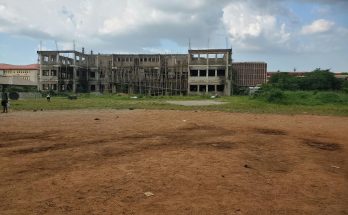
Editor Note: The lack of answers from official administrative quarters meant that among other things, this article is not able to speak on what to make of the image of a clock tower in the digitally rendered architectural plan seen in front of the new senate building.


I am a 500 level student, this clock worked while I was in 100 level