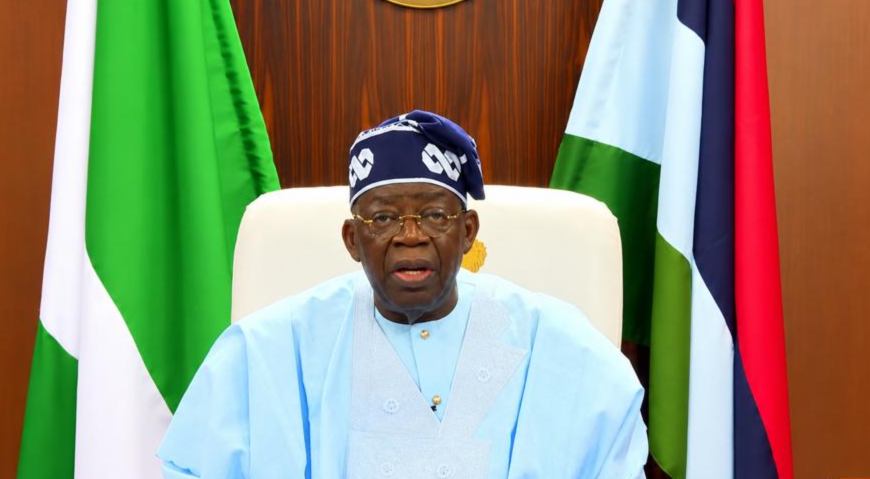
President Bola Ahmed Tinubu has declared that Nigeria is moving from a period of economic reforms into what he described as an “age of prosperity”, with his administration now focused on reducing the cost of living, creating jobs and expanding economic opportunities.
Tinubu made the declaration on Thursday, October 1, 2026, in his Independence Day address to Nigerians as the country marked its 66th anniversary.
The President acknowledged that the economic reforms implemented by his administration had been difficult and had brought hardship to citizens, but maintained that they were necessary to address what he described as longstanding weaknesses in the Nigerian economy.
Using the analogy of a patient undergoing cancer treatment, Tinubu said previous administrations had largely addressed the symptoms of economic problems without confronting their underlying causes.
He said his administration therefore chose to undertake difficult reforms despite their immediate effects.
“The reforms that followed were difficult. The side effects were real,” Tinubu said, arguing that the effects of the reforms should not be confused with the economic problems they were intended to address.
The President also defended the removal of fuel subsidies, warning against calls to reverse the policy and return to what he described as an “abuse of addictive subsidies”.
According to Tinubu, indicators of improvement had emerged following the reforms. He said Nigeria’s economy had grown by more than four per cent in 2026, while both the oil and non-oil sectors contributed to what he described as a period of stable growth.
He also cited a decline in oil theft, a fall in inflation from its peak, increased foreign reserves and greater stability in the foreign exchange market as signs of improvement. Tinubu further said Nigeria recorded more than $6 billion in non-oil export revenue in 2025, describing it as the highest in the country’s history.
The President said the government’s economic priority had now shifted from correcting the country’s economic direction to ensuring that the benefits of growth were widely felt.
“The central economic task before us has changed,” he said. “Now, our purpose is simple: shared and widespread prosperity.”
Tinubu said reducing the cost of living would be central to the next phase of his administration. He outlined plans to increase agricultural production through mechanised irrigation, dry-season farming, improved access to seeds and fertiliser, and greater mechanisation, while also investing in storage and transportation.
He said the government would continue to develop roads, railways and ports to improve the movement of goods from farms and factories to markets.
On employment, the President said jobs, enterprise and industrial growth would remain central to government policy. He said the administration would seek to expand gas-powered industries, support businesses and factories, improve digital connectivity and invest in skills required by employers.
Tinubu also highlighted government programmes including the Nigerian Education Loan Fund (NELFUND) and CREDICORP as measures intended to support Nigerians while the economy undergoes longer-term changes. He described the programmes as a bridge towards broader prosperity rather than substitutes for it.
The President acknowledged that many Nigerians were still experiencing economic difficulties and poverty, but attributed the problems to what he described as the accumulated consequences of poor decisions over several decades.
He said the government could not reverse problems that had accumulated over generations within four years, but could alter the country’s trajectory.
“We cannot erase in four years what accumulated over generations, but we can change its course,” Tinubu said.
Tinubu said the next phase would require sustained economic growth, productive employment and continued investment before Nigerians could fully experience the prosperity his administration was projecting.
“The age of reform has done its work. Now begins the age of prosperity,” he declared.
He urged Nigerians to look ahead with confidence and said the country was entering a period when prosperity and opportunity should be more widely shared.
Tinubu concluded by calling on Nigerians to move forward together, expressing confidence in the country’s future and wishing citizens a happy Independence Day.