
by Ndubeze H. Chisom
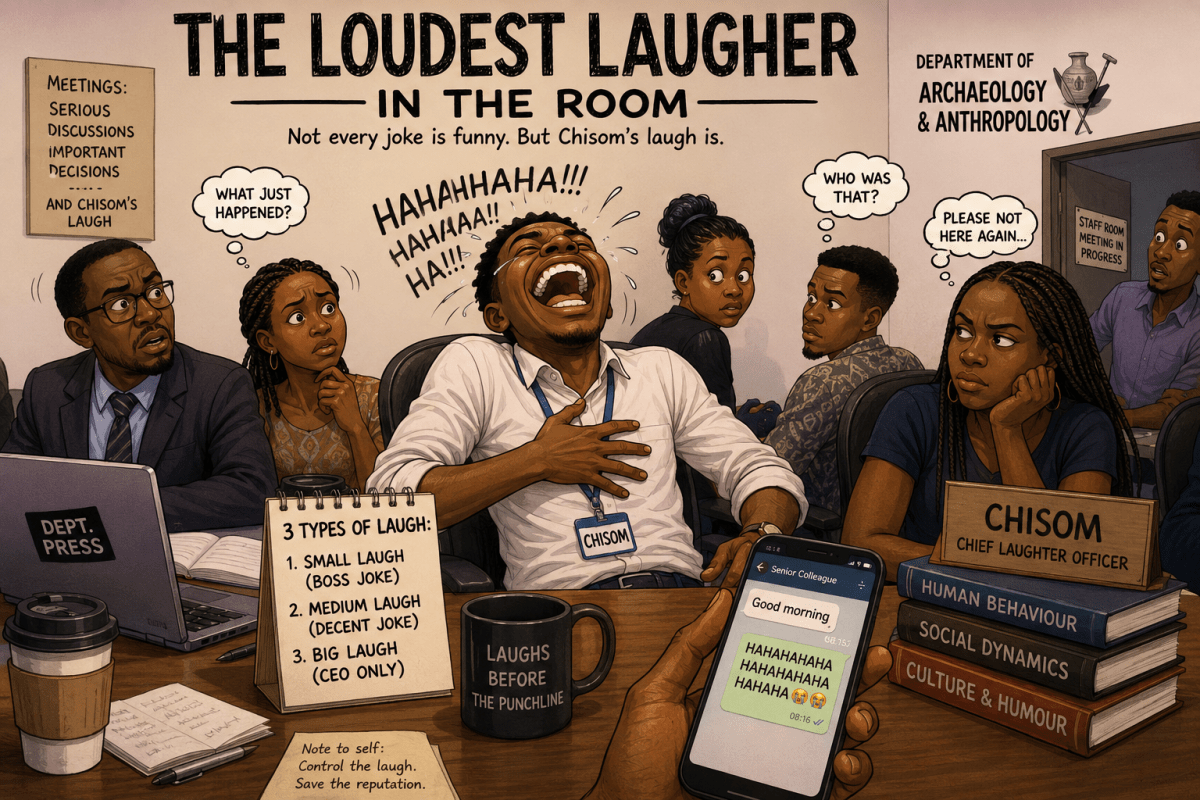
Chisom laughs at everything. Doesn’t matter if it’s funny. His boss could sneeze, and Chisom would fold over as if he’d just witnessed the greatest joke ever told.
Chisom doesn’t laugh. He erupts. The first time people hear it, they don’t laugh with him. They look around to see what exploded.
He has three kinds of laughter. The small one is for jokes that aren’t really jokes. The medium one is for things that are mildly funny. Then there’s the big one, head back, hand on chest, chair fighting for its life. That one is reserved for important people. Nobody has ever seen him use it for his friends.
At meetings, Chisom laughs before the punchline arrives. Sometimes before the joke even exists. Even before the speaker finished clearing their throat.
His texting habits aren’t any better. Send him “Good morning,” and he’ll reply, “HAHAHAHAHA.” You begin to wonder what exactly was funny about daylight.
His friends noticed something else: around them, he barely reacts. Maybe a nod. A dry “lol.” But let one senior colleague walk by, and suddenly he’s gasping for air, wiping imaginary tears, laughing like rent has just been cancelled.
The strange part is, Chisom doesn’t laugh often. But when he does, everyone gets involved.
Teachers stop talking, Conversations freeze, even the person who made the joke starts questioning whether they accidentally invented comedy.
He’s tried holding it in before. It only comes back louder, like it spent five minutes charging. Nobody asks, “What was so funny?” They ask, “Who was that?”
His friends have stopped saying, “Nice joke.” Now they whisper, “Please… not here. People are looking.
One afternoon, Chisom laughed in a silent room. Nobody knew why. Nobody asked. Everyone simply accepted that someone had finally lost their mind and they learnt to live with Chisom the Laughing Machine.
Originally Published under AASA Press