By Okeowo Hephzibah Ọpẹ́yẹmí
Almost three decades after the death of one of hip-hop’s biggest stars, the mystery surrounding the killing of Tupac Shakur is back in the courtroom.
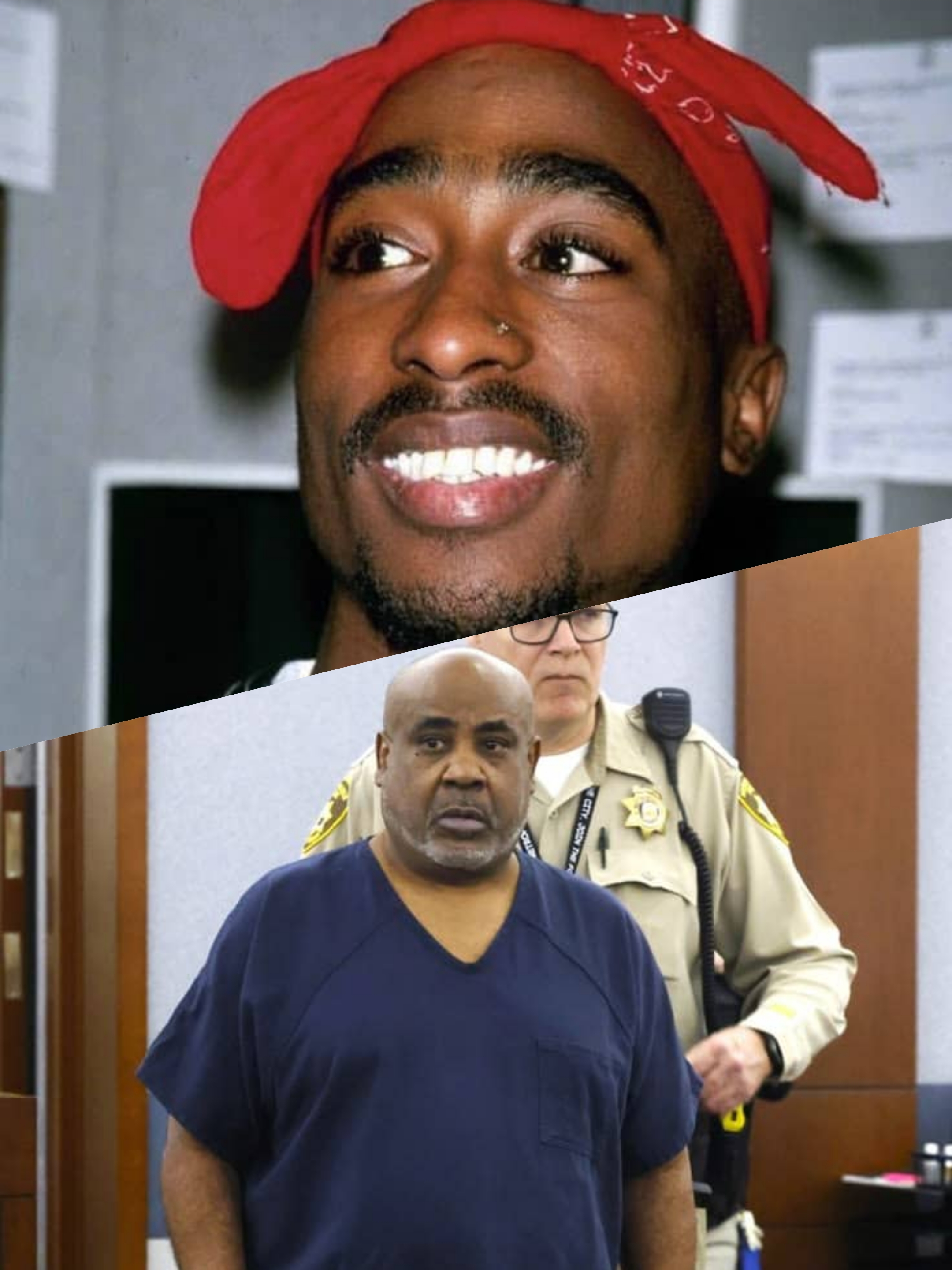
Duane “Keffe D” Davis arrived at the Clark County District Court Regional Justice Centre in Las Vegas on Monday, August 10, 2026, as jury selection began in his murder trial over the 1996 killing of Tupac Shakur.
For nearly 30 years, the question of who killed Tupac remained without a courtroom answer. Now, Davis, the former South Side Compton Crips gang leader, is the only person ever charged in connection with the rapper’s death.
What the case is about
Tupac Shakur was shot four times on September 7, 1996, after leaving a Mike Tyson boxing match at the MGM Grand in Las Vegas. He was in a BMW with Death Row Records boss Marion “Suge” Knight when a white Cadillac pulled alongside their vehicle, and gunfire broke out. Tupac was, however, taken to the hospital but died six days later, on September 13, at the age of 25.
His death quickly became one of the most talked-about unsolved killings in American music. Investigations continued, but no one was charged for decades. The case appeared to be heading towards becoming another mystery that would never receive a definite answer.
Then came Duane Davis.
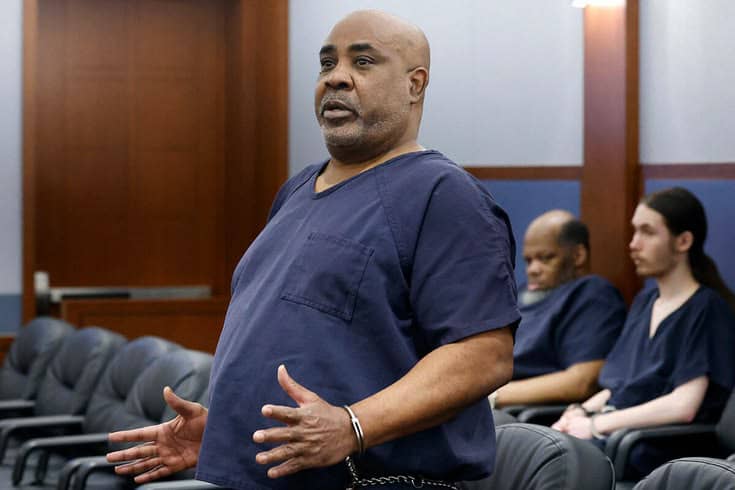
Davis had been speaking publicly about Tupac’s death for years before he was arrested.
What does Davis have to do with it?
In his 2019 memoir, Compton Street Legend, Davis discussed the events surrounding Tupac’s killing and acknowledged that he was in the white Cadillac that followed Tupac’s car. He has also said that he obtained the gun that was later used in the shooting.
Those statements might eventually become a major part of the case against him.
Davis was arrested in September 2023, following a renewed investigation by Las Vegas police and a search of a home connected to him.
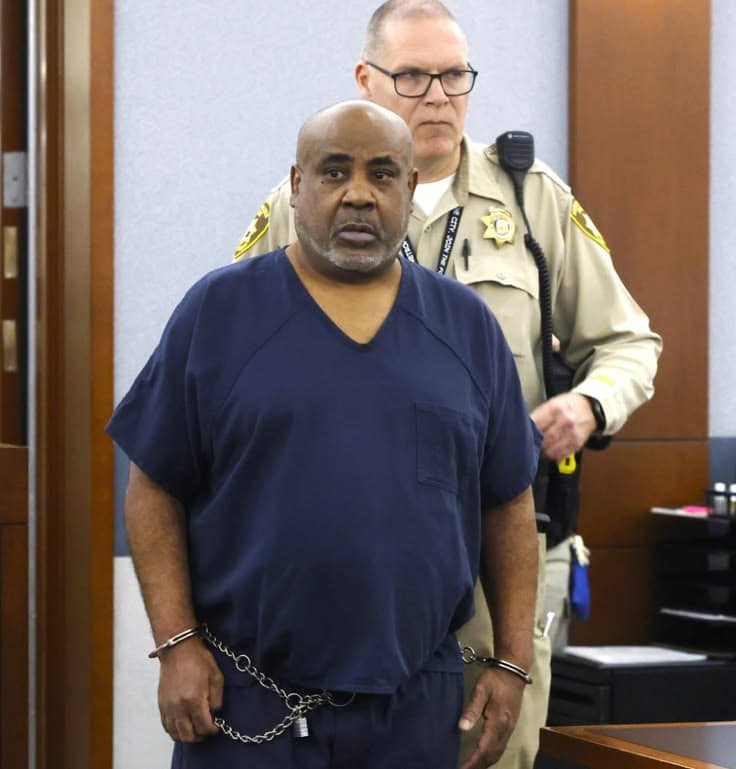
Prosecutors now argue that Davis orchestrated the attack as retaliation for an earlier confrontation involving his nephew, Orlando “Baby Lane” Anderson, at the MGM Grand just hours before Tupac was killed.
The prosecution does not have to prove that Davis pulled the trigger. They argue that he helped organise the attack and provided the weapon used in the killing.
But Davis has a different story.
He has denied being in Las Vegas when Tupac was killed and has questioned the account contained in the book, saying that a ghostwriter wrote it. “I did not write that book,” Davis has said.
Some of the most significant evidence against Davis comes from things Davis himself said. Davis could take the stand and argue that he made up the story for the book, saying in effect that he lied about his involvement but did not kill Tupac.
TUPAC, BIGGIE AND A RIVALRY THAT BECAME BIGGER THAN MUSIC
The story of Tupac’s death is also tied to one of the biggest rivalries in hip-hop history.
Before their relationship fell apart, Tupac Shakur and Christopher Wallace, popularly known as The Notorious B.I.G., were friends. That changed after Tupac was shot and robbed in New York in 1994.
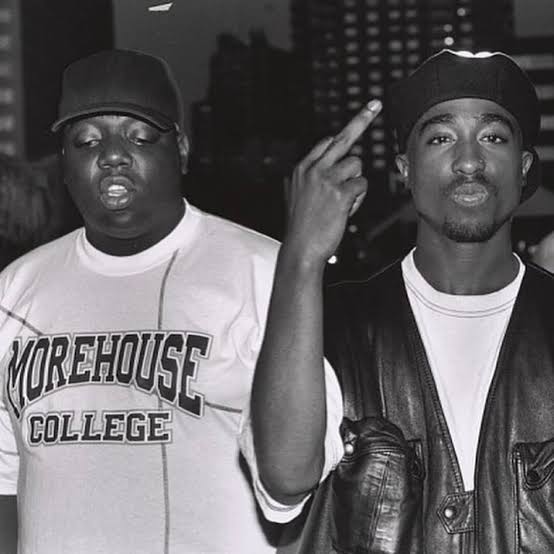
Tupac later believed that Biggie and the people around him knew the attack was coming and failed to warn him. The disagreement between the two rappers soon became much bigger than Tupac and Biggie. It became a battle between the West Coast and the East Coast, with Death Row Records and Bad Boy Records at the centre of the growing tension.
Tupac became one of the faces of the West Coast while Biggie represented the East Coast. What had started as a personal disagreement between two successful rappers became part of a much wider conflict involving music, record labels, street affiliations and pride.
Then Tupac was killed in Las Vegas.
Less than a year later, Biggie was also killed in Los Angeles. Despite being the prime suspect for Tupac’s death.
Two friends had become symbols of a rivalry, and both were gone: Tupac Shakur at the age of 25 and Biggie at the age of 24.
However, Davis has also repeatedly claimed that Bad Boy Records founder Sean “Diddy” Combs offered him $1 million to kill Tupac and Knight. Combs has denied the allegation, and the claim remains an allegation made by Davis, not a fact. Combs is not charged in Tupac’s killing.
Beyond the gang fight and rival, who was Tupac Shakur?
To reduce Tupac Shakur to the Death Row image, the gangsta-rap persona, and the feud with Biggie would be to tell only part of his story.
Tupac Shakur was born in New York City. Tupac moved to Northern California as a teenager before eventually becoming one of the most recognisable figures in West Coast hip-hop.
His mother, Afeni Shakur, was a former Black Panther and a major influence on his understanding of politics, race and social inequality.
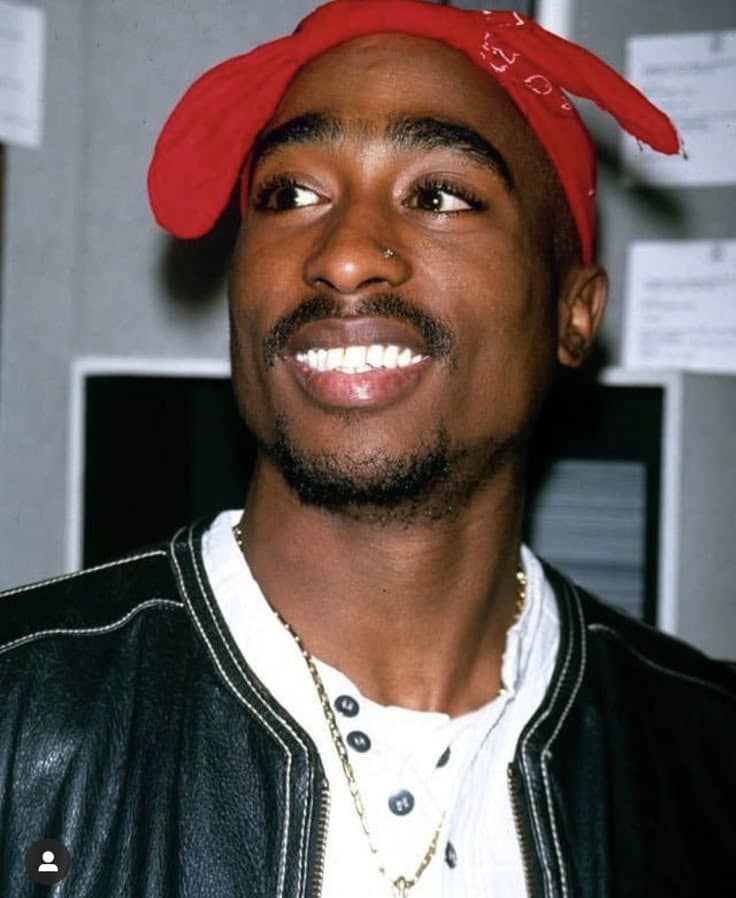
For Tupac, music was more than music. His activism found its way into his art. His songs spoke about poverty, racism, violence, family, inequality and the struggles of people living in disadvantaged communities.
“He was a product of the Black liberation movement,” Santi Elijah Holley, author of An Amerikan Family: The Shakurs and the Nation They Created, has argued, describing Tupac’s music as an extension of his politics.
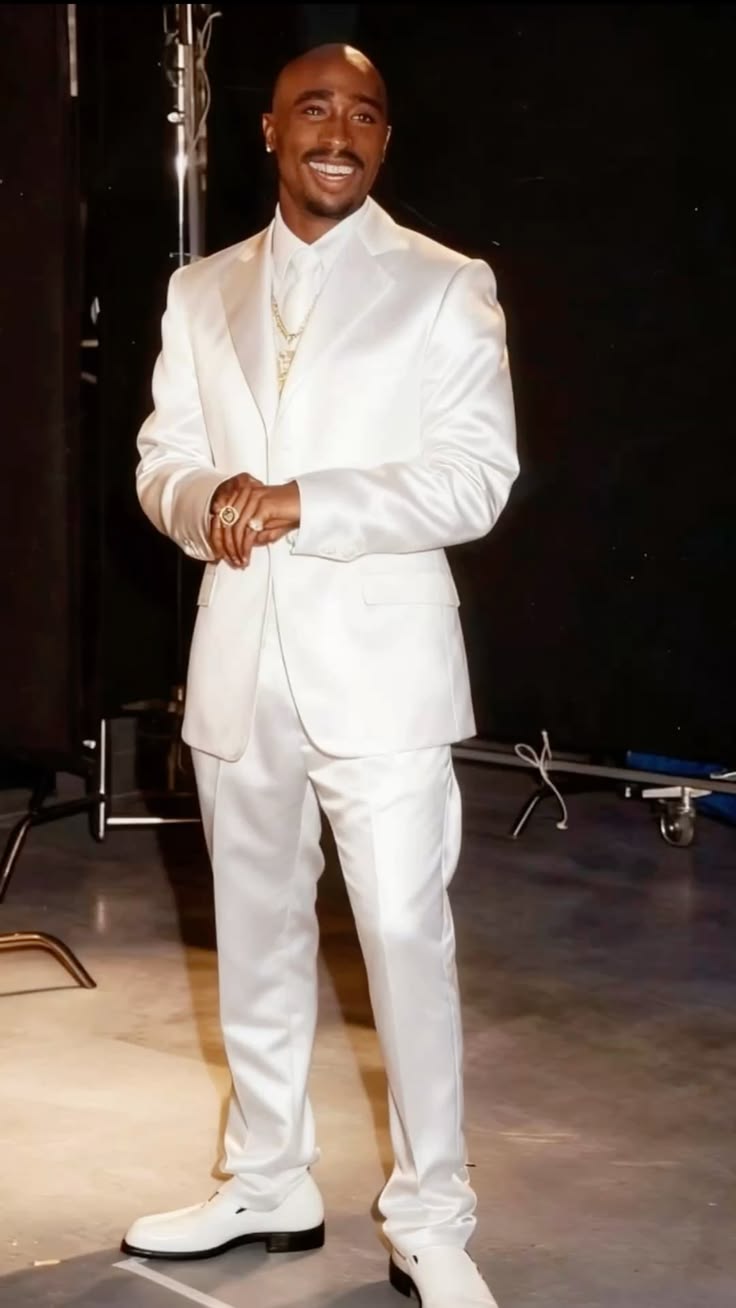
“His activism was his art, his lyrics.”
Away from music, Tupac also built a career as an actor, appearing in several Hollywood films.
His 1996 double album, All Eyez on Me, released months before his death, became one of the defining albums of his career and helped cement his place among the biggest names in gangsta rap. The album would eventually achieve Diamond status in the United States. Tupac had become more than a rapper. His death made him a symbol.
Where do we go from here?
For years, the investigation seemed to have nowhere to go.
Orlando Anderson, Davis’ nephew and one of the men long associated with theories surrounding the killing, was never charged in Tupac’s death. Anderson was himself killed in an unrelated shooting in California in 1998. Other people prosecutors say were connected to the events of that night have also died.
Davis, now 63, remains the last living suspect charged in the case.
The prosecution has released a long list of potential witnesses, including members of Tupac’s family, former Las Vegas mayor Oscar Goodman and Marion “Suge” Knight.
Knight, who was driving the car when Tupac was shot, has previously said that he does not want to testify. Whether he eventually takes the witness stand remains uncertain.
For the prosecution, the trial is an opportunity to finally connect Davis to the events that ended Tupac’s life.
For the defence, it is a chance to challenge a case built heavily around statements made by Davis himself, years before he was charged.
And perhaps the biggest question remains unanswered: If Davis did not pull the trigger, who did?
Conclusion
The trial may establish Davis’ role without ever giving the world the name of the person who fired the fatal shots.
That is what makes the Tupac Shakur case different from an ordinary murder trial.
It is a story that has lived for almost 30 years through music, rumours, accusations, interviews and theories. A story that moved from the streets of Las Vegas to the pages of a book and, finally, into a courtroom.
Now, decades after Tupac Shakur was shot, the world is watching to see whether the courtroom can finally separate what is known from what has only been believed.
For almost 30 years, Tupac’s death has existed somewhere between fact, mystery and mythology.
The trial may finally begin to tell us which is which.