By Williams Owoeye
When it comes to public decisions, democracy seems to be the best bet as it allows the interest of all concerned parties to be represented. As rosy as this sounds, those that share insights with Plato, the iconic philosopher know this system is not without its flaws as it is based on what the majority says either wise or otherwise. This potential to downplay merit is best captured in the words of H.L. Mencken saying, “As democracy is perfected, the office of president represents, more and more closely, the inner soul of the people. On some great and glorious day the plain folks of the land will reach their hearts desire at last and the White House will be adorned by a downright moron.” While this is a direct reference to American democracy, the statement remains valid if we substitute other public officeholders be it in a green or a black house.
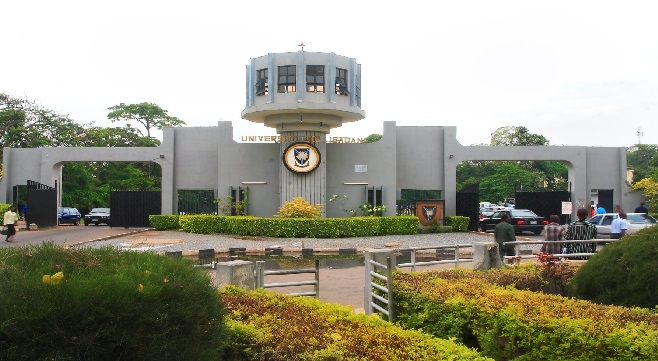
Democracy can however be reinforced through the grafting of meritocracy into its proceedings, this can give forth fruits that are sweet and devoid of corruption. This path is where the community of the University of Ibadan has trod in selecting its Vice Chancellors. It’s a process with numerous labyrinth of filters and bridges that the students can only spectate as this alien acrobatics are being performed. To bring the whole process home, it can be compared to the TV reality show, Big Brother Naija to a large extent. The committee that screens out candidates and appoints, based on merit, the best person for the job are analogous to the voice of Biggie. There are special teams and committees that scout for candidates and coordinate the selection process, these are similar to Ebuka and the production team. The several Professors running for the post are the Housemates and they have the administrative staff supporting them as the Icons and Elites that are actively involved in the process, only this time they don’t vote for the aspirants, they only vote to select Congregational Representatives. On the lower end of the ladder are the students that don’t vote but rely on “status updates” and catch the gist on media platforms.
The Buildup: The Journey So Far
The race started in July when aspirants were asked to send in their applications and 12 Professors with sterling profiles are found qualified to compete. For a race that will see the victor occupy the top seat of a federal institution which has all parts of the country as catchment areas, there is need to represent the diversity’s interest; hence, a Search Team is mandated to scout for and persuade candidates that are qualified to run but didn’t send in their applications initially. It is the work of this Search Team that eventually resulted in “16 heads” jostling for “one cap” as is currently evident. The name of the 16 qualified Professors are Femi MIMIKO, Hassan Ajisafe SALIU, Babatunde Lawal SALAKO, Oladele Olatunde LAYIWOLA, Raheem Adebayo LAWAL, Clement Olusegun Olaniran KOLAWOLE, Emiola Oluwabunmi OLAPADE-OLAOPA, Olatunde Rom KALILU, Tal-hatu Kolapo HAMZAT, Hakeem FAWEHINMI, Ebenezer Olatunde FAROMBI, Temitope Oluwagbenga ALONGE, Adeyinka Abideen ADERINTO, Olusegun George ADEMOWO, Babatunde Lateef ADELEKE, Kayode Oyedode ADEBOWALE, Aderemi RAJI-OYELADE, Anthony Kayode ONIFADE and their staggering profiles can be accessed on this blogpost.
Expectedly, the selection process has not been without some clamour and distractions. In a move that is somewhat similar to viewers that are Abuja indigenes demanding that one of the Abuja indigenes in Big Brother House be made winner regardless of competency just because the Big Brother House is located in Abuja, a group known as Central Council of Ibadan Indigenes, CCII has called for the selection of one of the Ibadan indigenes that are contesting. Their emotional argument is that an Ibadan indigene has never been a VC of the institution. In a similar development, some religious groups have also called for the recognition of their religion as they feel their interest is not fully represented. These agitations have however been downplayed by the incumbent VC in a recent interview with The Guardian newspaper as he emphasized that all those criteria the aggrieved groups are clamouring for won’t matter in the scheme of things.
Fixtures: What Next?
On the 21st of September, 2020 is not the day the VC will be selected. It is the day an election will be done by the Senate to select two representatives that will join the Chairman of the Governing Council, Nde Joshua Mutka Waklek and other representatives that have been elected by the Congregation (of staff). These are representatives that are not part of the Search Team and they will form the Governing Council that will screen and select the next Vice Chancellor according to the constitution. What follows next is the eviction phase where the 16 aspirants will be screened and the list narrowed down to about 5 aspirants. Eventually the 5 aspirants will reappear for screening and a winner will be selected to take on the daunting task of Vice Chancellorship. Looking at this painstaking process with its multilayer of filters which is akin to navigating through an intricate maze, it is expected that the one that will eventually emerge will definitely be the best out of the aspirants.
The Prospects: High Hopes and Expectations
Every member of the university community has their fingers crossed, each one with their wishes and supplications. While the student would wish for an administration that will treasure accountability with its in loco parentis roles, the non-teaching staff would want nothing more than a VC that will duly acknowledge and respect their profession while the teaching staff will want one that will guarantee an enabling environment for growth. For the students, one thing is however highly probable: the incoming VC should build on the strides that the current administration has taken towards digitalization and by extension, convenience. It should be noted that all the elections that has been done so far in selecting the next Vice Chancellor has been done using e-voting, perhaps that’s another silver lining to look at in this COVID-19 era but it should be recalled that the tenure of Prof. Idowu Olayinka has seen some digital reforms before the pandemic. Although the Results Management System deployed suffered some hiccups which led to the sealing of its lips, it is expected that renovation and consolidation should be the lot of such projects. But until November when the tenure of the current Vice Chancellor will expire, we can only wish the best man for the job wins.