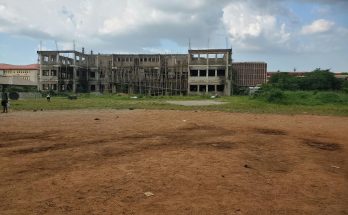
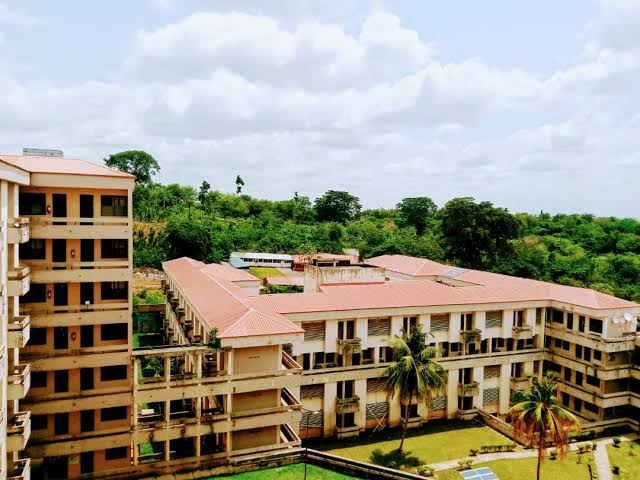
Every year, returning students who are interested in staying in the school halls of residence find themselves amid both internal and external turmoil. It is always a struggle year after year to secure a spot in the halls of residence at the institution. Though the school rightly informs returning students about the unlikelihood of securing accommodation in the halls, most students would rather stay in the hostels due to the ease of access to the school facilities and the numerous faculties, the proximity to classes, and the monetary price required in contrast to other means of shelter. On the other hand, some would rather secure accommodation outside the halls of residence.
“It’s all very disturbing. The option to pay was showing on my portal, then at some point it vanished. I’m not sure of what I’m seeing or what I should even do. It is just annoying. I have to go and see the porter’s again to inform them of the issue, and we are already half into a full resumption week but I am unable to resume yet because I have no place to stay,” said a frustrated returning student who craved anonymity.
At the beginning of the session, the freshmen and the finalists are prioritized in the distribution of accommodation spaces. It is only after these groups of students are automatically allocated a room in the hall that the hall management begins to consider the other returning students for the allocation of rooms.
This is the origin of the quagmire faced by returning students in various halls of residence. Most have to simultaneously battle ongoing classes and the process of being allocated a slot in the hall. This leaves most of them in a terrible mental space. A lot of students during this period are in a state of disarray, uncertainty, and discomfort.
UCJ UI spoke with multiple students across the male and female halls, who are trying frantically to secure accommodation in the halls and the experience seems to tally. For each of them, they expressed their frustration and perplexity with the situation.
This is the state of turmoil that some returning students find themselves in. While most, if not all, will eventually secure a room, very few students might still not be able to get accommodation. The latter set of students would inevitably have to find another means of shelter. This makes their effort to secure accommodation in vain, with them wishing to have gotten another means of shelter earlier.
In reaction, the Chairman of Council of Hall Chairpersons, Olaniyan Ibrahim confirms that he is aware of this accommodation crisis but maintains that the situation persists because of limited spaces left for returning students.
“I think the main issue is always because the hall management prioritizes the accommodation of freshers and finalists and the returning students have to manage the remaining spaces. First and second week is mainly for the freshers and finalists and the the remaining spaces are used to sort out the returning students,” he told UCJ Correspondent.
However, he didn’t respond to question on what the council is doing to avert the accommodation crisis in these halls of residence.
These issues, as it stands, can be credited to the archaic structure that the school management is still employing to manage problems like this. It puts both the hall management and the returning students in a precarious situation. It is pertinent that a new approach be employed in tackling this issue to reduce unnecessary stress, tension, and discomfort.
While the most sustainable solution to this problem would be building of more hostels which – government’s underfunding has made impossible – to accommodate more students and reduce competition, at this moment it would be a difficult, time-consuming, and resource-consuming project to undergo.
The next possible and immediate solution to this issue would be the employment of an online platform for students to apply and monitor the process of allocation. The employment of this method would enable the process to start much earlier and resolve most of the issues much earlier. The data gathered can also help in projecting and planning for future processes. As the world transitions to digitized methods, structures, and processes, the digitized method can also contribute immensely to the resolution of this issue.
If this can be employed, it would greatly mitigate a vast amount of the stress that comes with the allocation process for returning students.
By: Ibraheem Fiyinfoluwa