By Debbiemuse
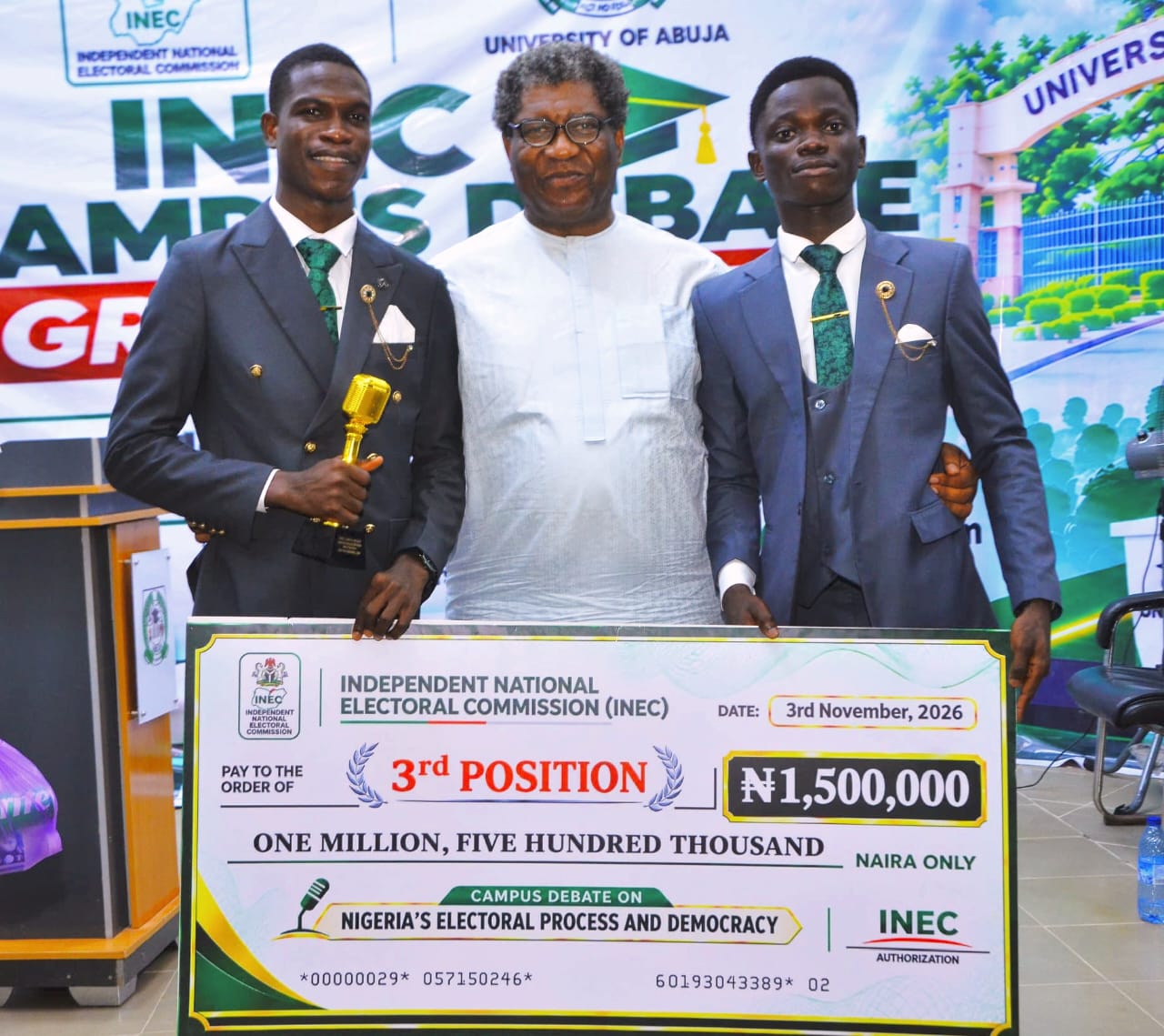
The University of Ibadan (UI) finished third at the 2026 Independent National Electoral Commission (INEC) Campus Debate Grand Finale, held on Tuesday, November 3, at the Faculty of Law Theatre, University of Abuja, and won a cash prize of ₦1.5 million.
The competition, themed “Nigeria’s Electoral Process and Democracy,” brought together debate teams from four Nigerian universities: UI, the University of Jos, the University of Nigeria, Nsukka (UNN), and Bayero University, Kano (BUK).
UI’s participation followed its victory at the preliminary campus debate held on October 10, 2026, where its representatives, Mayowa Adekola Peculiar and Israel Bolarinwa, both students of the Department of Arts and Social Sciences Education, Faculty of Education, emerged winners. The duo subsequently represented the university and the South-West at the national competition in Abuja.
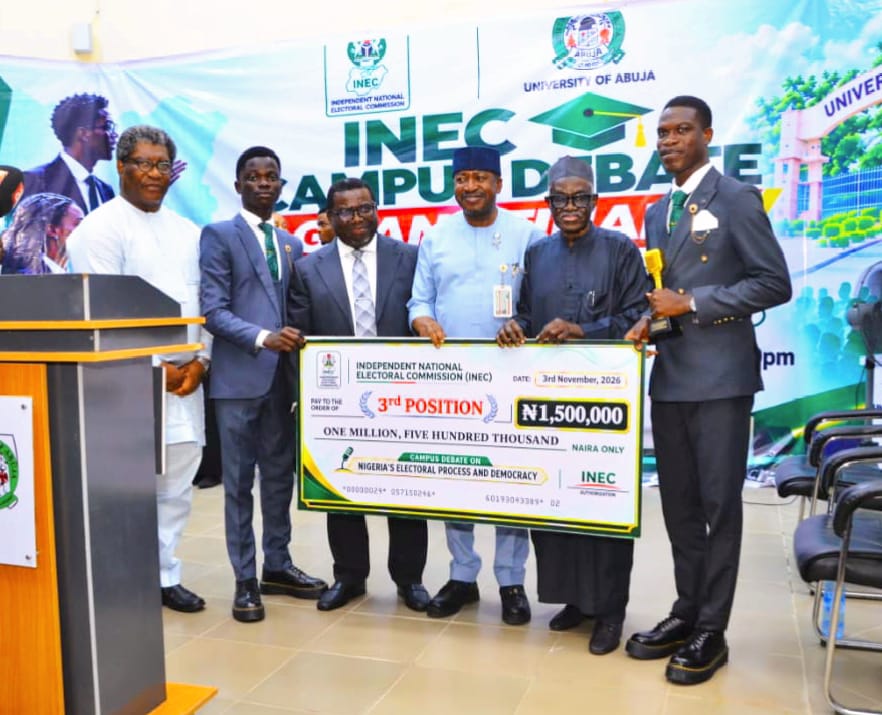
At the end of the competition, the University of Jos emerged winner, followed by Bayero University, Kano, as first runner-up. The University of Ibadan finished as second runner-up, while the University of Nigeria, Nsukka, placed fourth.
The grand finale provided a platform for students to demonstrate their understanding of Nigeria’s electoral system, exchange ideas on democratic governance and discuss issues surrounding the country’s political future.
The event also featured an electoral quiz competition organised for students of the host institution, adding another dimension to its focus on voter education and political awareness.
Speaking with the Press after the competition, Israel Bolarinwa described the experience as worthwhile despite the demands of preparing within a short period while also dealing with examinations.
“For me, I would see this particular one as one of those where the means ultimately justify the end. So much effort within a short period of time, coupled with exams. But it was all justified,” he said.
He identified the research process, particularly learning how INEC and elections operate, as one of the major highlights of the experience.
“The research process of getting to understand how INEC and elections really work was one major highlight. I mean, I’m no longer an average Nigerian who speaks out of oblivion,” Bolarinwa added.
Reflecting on the country’s electoral system, he expressed hope that the experience would contribute to greater public understanding and improvements in the electoral process.
“All of these processes leave me hoping that things get better with our electoral process. I hope trust is restored in the system and I hope everything works out,” he said.
Mayowa Adekola Peculiar also described the experience as worthwhile, highlighting the opportunity to interact with students from other institutions and contribute to voter education ahead of the 2027 general elections.
“Everything good is coming gradually, and I loved every bit of its presence. For this particular one, I loved the hospitality, the interactions with the debaters from other institutions and especially the opportunity to contribute my ideas to voter education ahead of the 2027 general elections; every moment was worthwhile,” he told ASSESA Press.
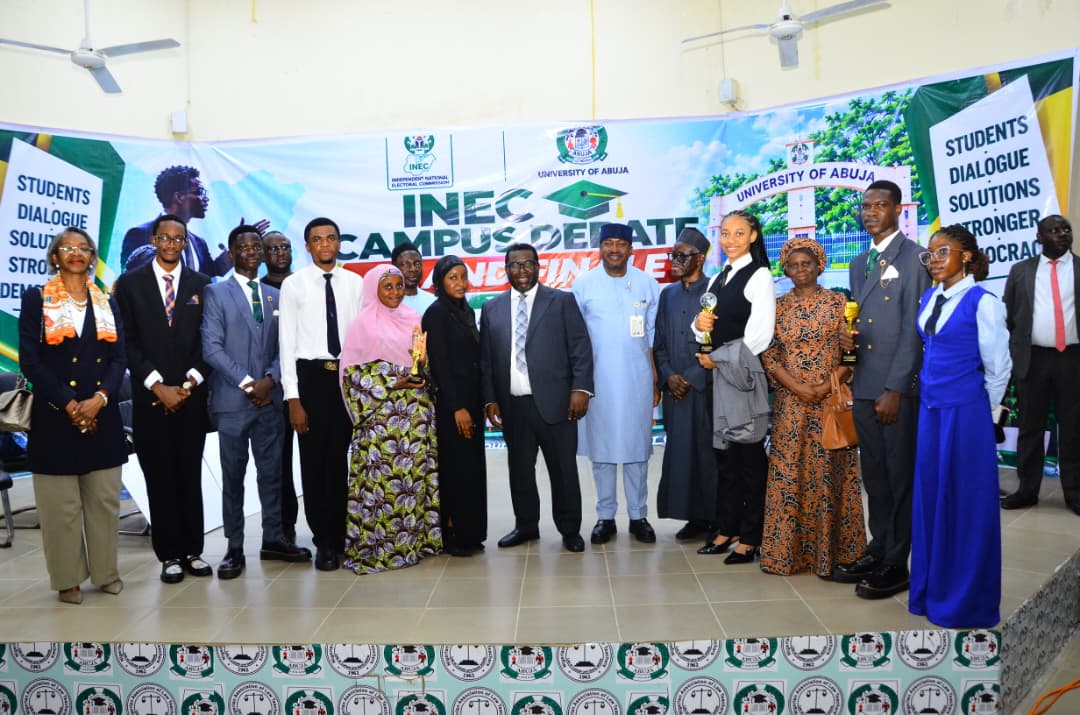
The competition is part of INEC’s broader voter education and public enlightenment efforts ahead of the 2027 general elections, with universities serving as platforms to encourage young people to engage more actively in democratic processes.