By: Ibraheem Fiyinfoluwa
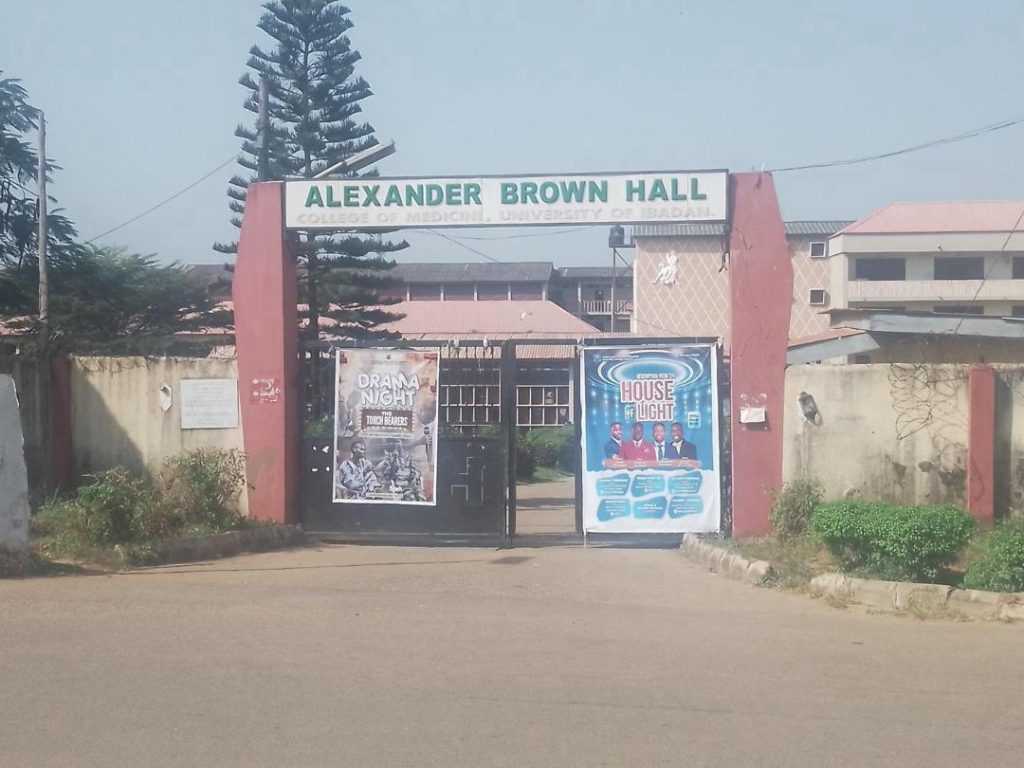
Upon stepping into the University College Hospital, Ibadan, on Tuesday afternoon, one could see various students with their dark blue scrubs contrasting their glaring white footwear walk the streets with umbrellas shielding their heads from the sun. One could also feel a dullness in the air. A forced dull. An unwanted peace. A peace that comes as a consequence of the inability to do something despite the yearning to do so. This is peace that accompanies a lack of electricity supply to the environs for the past 17 days. Engulfed in this crisis are the students inhabiting Alexander Brown Hall and Ayo Falase Hall who have been enduring life for half a month without meaningful power supply.
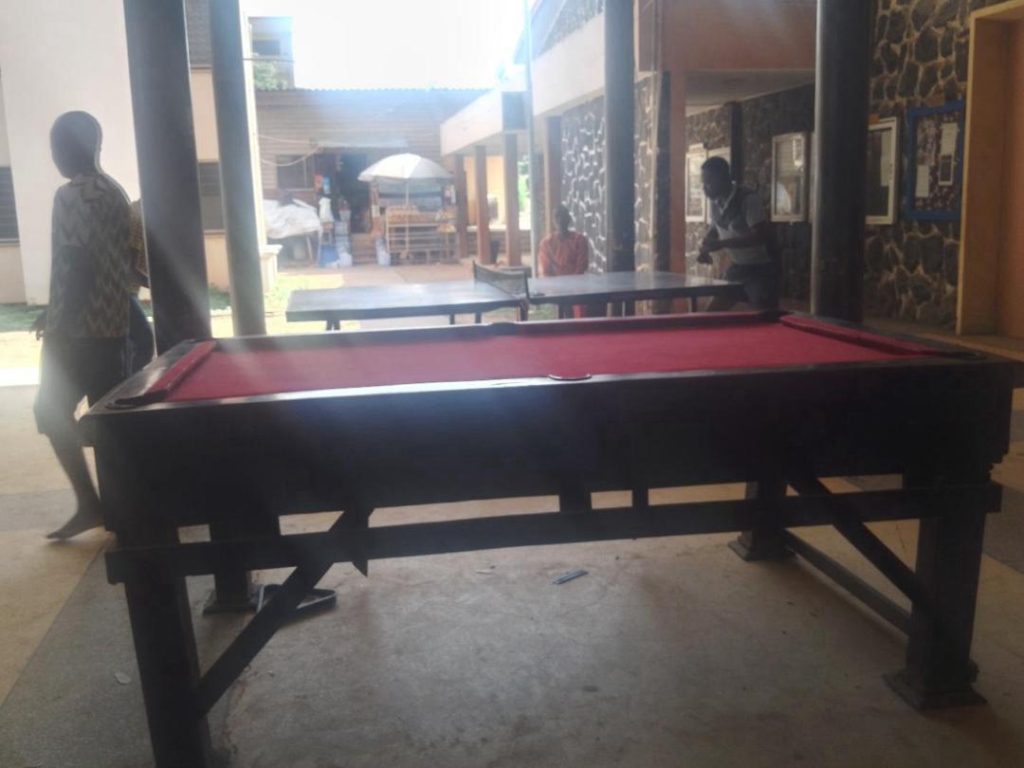
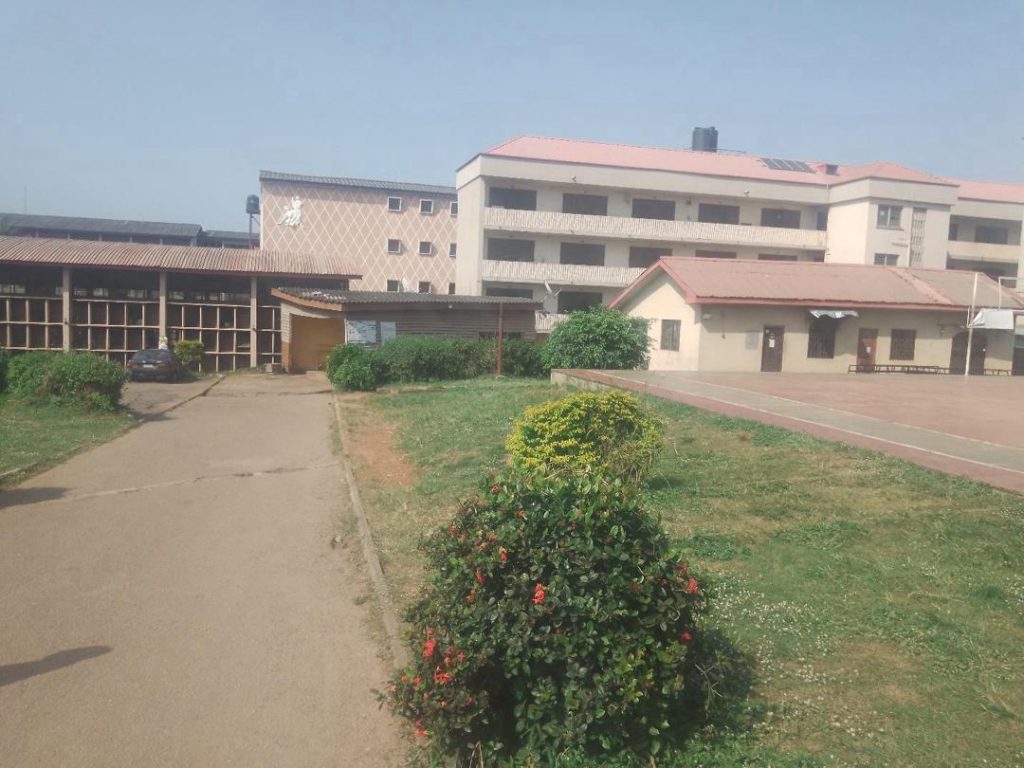
Alexander Brown Hall that afternoon echoed the already present silence, which at that point was drowning out the buzzing sound of a generator. The hall seemed empty, with just a few individuals loitering around various parts of the hall. A handful of students were speaking at the quadrangle while another group was having a go at table tennis. Despite their various activities, an issue still nags at the back of their minds. The electricity issue has been a drag on their lives.
The Recurring Electrical Outages in the Hall
The problem of power outages in the hall is not a novel one but one that has occurred so many times that it has become much more of a reality to students in the halls of residence.
Samuel, Eunice, and Nnamdi are all 500-level MBBS students who sat huddled together at the quadrangle, where they were laughing and discussing intermittently. When asked about when the last time the electricity issue occurred, Samuel answered “around April,” but Eunice thoughtfully questioned his answer.
Samuel’s reply went on to reveal that the electricity outages were a ‘continuous’ constant, but since April this has been the only time it has lasted this long.
“The electricity outages we had in between April and now are a lot. It happens like every week. We have like two days, three days, seven days outages and thereabout constantly,” he replied amidst chuckles.
“It is scary actually when you have light. When there is light constantly, it is a miracle,” Eunice chipped in.
However, this outage is in line to break the record for the longest recalled power outage, which lasted for 17 days.
Joseph (not his real name), also a 500-level MBBS student, has the same experience after being initially assured when he arrived at ABH that the power supply was a bit constant and that the recorded few days of outage had to do with issues with the transformer, which would take at most four days before it was fixed.
“When I came here, I was told there was light constantly, but since I have been here, we have had up to six-seven-eight days without light. There are the former seventeen days without power and now another seventeen days. This still occurs in the midst of power being only unavailable at ABH for three-four days while other parts of UCH have light. This is apart from the general light issues,” Joseph said with the ping-pong of the tennis ball reverberating in the quadrangle.
Other students around commented that they cannot even keep track of the number of times that power outages have occurred.
These electricity issues have however made life in the hall a lot more difficult than it should, as students have to drag through their lives and studies in these conditions.
The Drag through Life
Sam, who was watching the tennis game, also termed life stressful in these past few days.
“Life has been stressful. Just very stressful. We have to go outside the hall to various parts of the college to get water. Some even go outside the gates to get water. You never know the distance they went to and where they are coming from,” he said.
For him, his studying has also taken a dip due to the living conditions surrounding him.
“Since this event started, productivity has gone down. Frustration from all that is happening affects concentration. Some people even need light to study, cook, and perform many other activities,” he commented somberly.
Samuel, Nnamdi, and Eunice described life during this period as “hell,” “indescribable,” and “inhumane,” respectively.
“For charging, we find our ways; some people go to U.I., and there are some wards that use inverters where devices can be charged,” said Eunice.
They also noted that some students had to write exams during the current blackout period. Physiotherapy students began exams almost at the same time the outage began and still had to continue with it despite the elongated power outage.
For Joseph, the past 17 days have been difficult. He tried to take his mind off the electricity issue and try to cope by concentrating fully on his new posting to paediatrics, which is concerned with infants and children. However, the electricity issue still snuck in to shortchange his plan.
“I tried to distract myself with school for two weeks. I mean, new posting to pediatrics. I decided, at least if there is no light, let me try my best to help with the patients and learn, but then the mothers of the patients stopped answering us. You know the patients in the ward are children, and they do not understand what is going on. There was one we met who said she could not talk to us because her child was not getting the required treatment. The main problem in this case was that there was no light in the lab to carry out the necessary tests for the child,” he explained.
With the light issue generating a knock-on effect that still affected his plans to cope with the issue, it would seem that experiencing the negative effect of the power outage is unescapable.
The light issue has not only hampered his posting experience; it is also affecting how he gets by day-to-day even in the midst of his academic duties.
“As much as I feel that I was pouring myself into the posting, after doing all of that you are expected to come back here to read, but by the time I get back to the hall, I’m thinking of water, I’m thinking of charging my phone, and I’m tired because of the day. I try to charge my phone before going to get water, but most times I just sleep off without being able to get water for the next day,” he said.
It goes even further to affecting his feeding. Even though he has food, he cannot cook because there is no water, and sometimes he is too tired to cook and has to go to the cafeteria, which can be expensive.
“To eat well in the cafeteria, you’d have to spend up to two thousand naira. You can get food for one thousand naira, but it’s less. The light issue basically has a knock-on effect on everything,” he further explained.
Survival Mechanisms
The inhabitants of the hall nevertheless praised the hall executives for their efforts to help students during this difficult time.
Joseph noted that he was grateful to the executives because they put on the generator in the hall at least once a day to pump water, and he most times uses the opportunity to get water, even though that also comes with its difficulties.
“When they pump water, in order to beat the crowd, I go by two or three o’clock in the night, but even then, there is still a line because about seven or eight people will have the same idea. I also heard that people who go by four a.m. also have the same issues. There is usually a long line, but it’s most times not as bad as what is shown in the pictures,” he said.
Samuel also reverberated that the hall executives have been getting fuel to pump water. The executives were, however, absent at the time that this report was carried out.
Boycotting Classes: A Needed Line of Action
Following the elongated power outage, all medical students reached an agreement that was enacted at the beginning of the week to boycott all classes and only resume when there is a lasting solution to the problem on ground.
Samuel, Eunice, and Nnamdi all agreed that it was a necessary step to take and that no students are attending classes. Samuel thinks it is a justifiable means of asking for better conditions before they resume classes.
“I think we are asking for about six hours of light. There is a gen that can power the halls, so we are asking them to at least fuel it for about six hours a day,” he said.
Joseph also supports the boycotting of classes because the clinical experience that he ought to get as a student is limited as a result of the power outage. As a person motivated to learn practically, the light issue is eroding opportunities to do that.
“Laboratories are currently not functioning in UCH, and laboratory investigations are being done outside. People that are not able to afford outside investigations do not do it,” he said. “I cannot go to the emergency, for example, to learn how certain procedures are done because if I go by night, everywhere is hot. The house officers and registrars are hot, tired, and frustrated. They would rather do it themselves because that would be more expedient than to watch me do it or try to do it.”
The disconnection of electricity to the University College Hospital by the Ibadan Electricity Distribution Company (IBEDC) due to a dispute over accumulated debts is hurting both workers, patients, and students of the college. The difficulties resulting from this line of action are ones that are of extreme discomfort to the parties involved, including students.
According to Samuel, if the power outage is solved, life in the college will be better.
“If the issue is fixed, life will not be hell. It will not be heaven too, but maybe earth,” he hilariously commented.
This underscores the need for the consideration of humanity by all parties involved in this crisis.