By Favour Mustapha
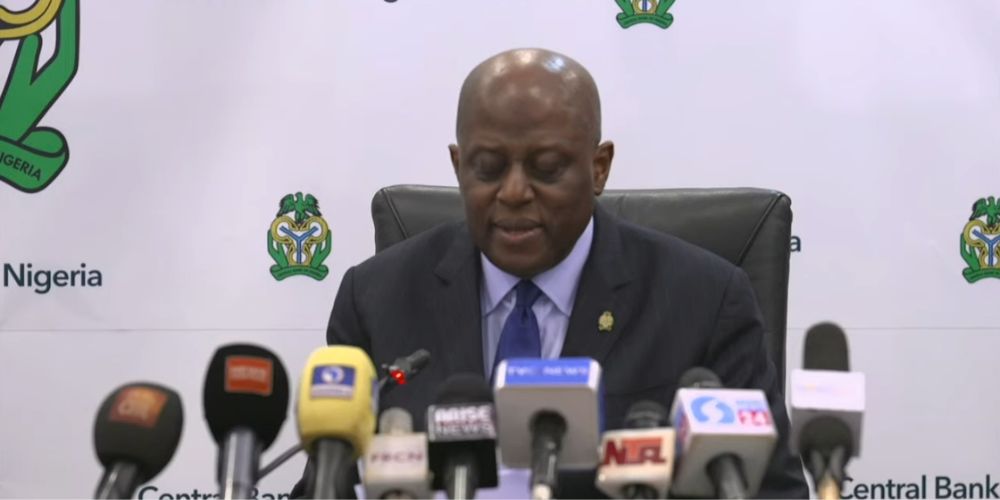
The Central Bank of Nigeria (CBN) has reduced the Monetary Policy Rate (MPR) from 26.5 per cent to 23 per cent, cutting the benchmark rate by 350 basis points at the conclusion of its 307th Monetary Policy Committee (MPC) meeting on September 22, 2026.
The decision, announced by CBN Governor Olayemi Cardoso, represents the first major reset of the MPR since the rate was held at 26.5 per cent at the previous meetings. The MPC also retained the Cash Reserve Ratio at 45 per cent for Deposit Money Banks and 16 per cent for Merchant Banks.
But beyond financial markets and economic headlines, what does a 23 per cent MPR actually mean for the average Nigerian student?
The answer is less straightforward than simply saying that “interest rates have fallen.”
What exactly is the MPR?
The Monetary Policy Rate is the CBN’s benchmark interest rate. It serves as an important signal for interest rates across the financial system and influences the cost at which money moves between financial institutions.
When the CBN changes the MPR, the effect can eventually be transmitted to commercial bank lending and deposit rates. However, a reduction in the MPR does not mean that every bank loan will immediately become cheaper by the same 3.5 percentage points.
For students, this distinction is important.
Could loans become cheaper?
Potentially, yes, but not immediately or automatically.
Students who borrow through banks, fintechs or other formal credit providers may eventually see changes in borrowing costs if financial institutions pass lower funding costs on to customers.
For example, a student borrowing money to cover an unexpected expense or finance a small business could potentially face lower interest charges in an environment of lower market rates.
However, the CBN’s 23 per cent MPR is not the interest rate students will pay on their loans. The actual rate charged by a lender depends on factors including its funding costs, risk assessment, operating costs and pricing decisions.
Students with existing loans should therefore not assume that their current repayment terms have automatically changed.
What about savings?
There is another side to lower interest rates that may be less obvious.
Students who save money in interest-bearing accounts or other fixed-income products could eventually see lower returns if banks and financial institutions reduce their deposit rates.
This means that the effect of a lower MPR is not simply “good for borrowers and bad for nobody.” The impact can differ depending on whether someone is borrowing, saving or investing.
For a student building an emergency fund or saving towards tuition, a change in deposit rates could affect how quickly those savings grow.
What does this mean for student entrepreneurs?
This is perhaps one of the more relevant areas for university students.
A student running a fashion business, food business, tutoring service, digital business or other small enterprise may require capital to purchase equipment, increase inventory or expand operations.
If lower policy rates eventually translate into cheaper business credit, the cost of financing such activities could decline.
But cheaper credit alone does not guarantee that a business will become more profitable. Demand, operating costs, competition, exchange rates and the prices of inputs will continue to matter.
What of food, transport and other expenses?
For this, food, transport and other school activities expenses will not necessarily become cheaper.
The CBN’s MPR decision does not directly determine the price of food, transport, accommodation or textbooks.
This is particularly important because Nigeria’s headline inflation rate stood at 15.39 per cent in August 2026, according to the National Bureau of Statistics, while food inflation was considerably higher at 19.57 per cent.
A lower MPR therefore should not be interpreted as an immediate reduction in the cost of living.
If a student’s transport fare is ₦1,000 today, the CBN’s decision does not mean the fare will automatically fall because the MPR has moved from 26.5 per cent to 23 per cent.
Similarly, a decline in inflation means that prices are increasing at a slower rate; it does not necessarily mean that prices have returned to their previous levels.
Why did the CBN cut the rate?
According to the MPC communiqué, the decision was intended primarily as an operational realignment to strengthen monetary-policy transmission and restore the MPR as the principal signal of monetary policy.
The CBN noted that the gap between the MPR and prevailing market rates had weakened the effectiveness of the policy rate. The committee also pointed to moderating inflation, stronger economic activity and improvements in external conditions.
This distinction matters because the CBN Governor said the move should not simply be interpreted as a shift away from a restrictive monetary-policy stance. The bank described it as a reset and recalibration of its operating framework.
Should students care about the MPR?
Yes, not because the 23 per cent figure will immediately change their daily expenses, but because monetary policy eventually affects the financial environment in which students live, save, borrow, invest and run businesses.
For students, the transmission could take several forms: the cost of borrowing, returns on savings, access to business credit and, indirectly, the broader level of economic activity.
The important point is that monetary policy works through the economy; it does not instantly translate into a change in the price of a student’s lunch or transport fare.
For now, the CBN’s reduction from 26.5 per cent to 23 per cent marks a significant development in Nigeria’s monetary-policy framework. What students experience in practice will depend on how banks and other financial institutions respond, how inflation evolves and how the policy change is transmitted through the wider economy.
For the Nigerian student, therefore, the headline is not simply “interest rates have fallen.” The real question is: how much of that change will eventually reach my pocket?
Sources: Central Bank of Nigeria; National Bureau of Statistics; TheCable; PUNCH.