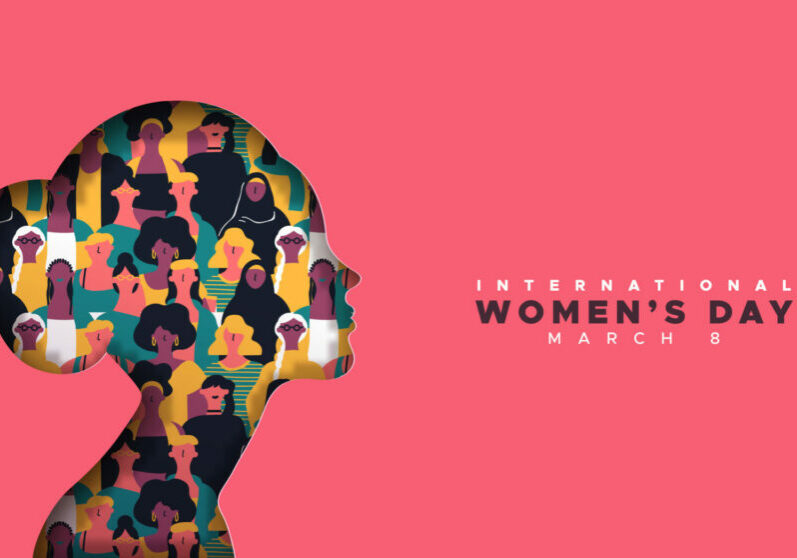
by Deborah Idowu
In the beginning, leadership was a story told through the echo of men’s footsteps. History books chronicled kings, generals and statesmen, often forgetting the women who built nations behind the veil of obscurity.
Yet, even in silence, they led. In every whispered counsel, every overlooked negotiation, every uncredited victory, women shaped the world. The threads of civilisation, carefully woven, bear their hands more than they bear their names.
To speak of women who lead is to speak of voices that refused to be muffled. Voices that rise not to exploit, but to illuminate; voices that insist on truth, justice, and progress.
From the quiet classrooms where the next generation is nurtured, to boardrooms where decisions shape economies, to movements that redefine freedom and human rights, women’s voices have been steady, unwavering, and transformative.
Consider Malala Yousafzai advocating for girls’ education in the face of terror, or Chimamanda Ngozi Adichie using literature as a mirror and a hammer. Their voices are the resonant instruments of change, carrying not just ideas, but conviction, vision and moral clarity.
Vision
The ability to see what is not yet visible is the hallmark of a woman who leads. It is more than ambition; it is the foresight to recognise potential where others see limitation, the courage to act when others hesitate.
Vision is the map drawn in empathy, experience, and imagination. It is the teacher who insists a struggling child can excel, the activist who foresees justice decades before the system catches up, the scientist who pursues discovery despite scepticism. Vision refuses the tyranny of the present, daring to imagine futures that are more inclusive, more equitable, more alive.
And victory
The culmination, the resonance of effort, takes forms both subtle and grand. Sometimes, it is not the accolades, the titles, or the headlines. Sometimes, it is the moment a young girl glimpses her potential mirrored in the achievements of those who came before her.
Sometimes, it is the dismantling of a policy, the rewriting of a law, the quiet affirmation of someone’s right to speak, to lead, to exist fully.
Victory is persistence; it is endurance; it is the refusal to yield even when every system conspires to diminish one’s presence.
Women who lead are neither myth nor exception. They are everywhere: the community organiser rallying resources for those in need, the nurse who tends to the sick at all hours, the entrepreneur redefining local economies, the scientist breaking barriers in laboratories and much more. Each embodies leadership that is relational as much as it is strategic, that balances intellect with intuition, ambition with empathy, courage with humility. Their victories ripple through lives, creating waves that extend beyond the individual into the fabric of society.
Yet leadership carries a paradox. Women who lead are, simultaneously, unbreakable and human: flawed, vulnerable, yearning. It is precisely in this tension between strength and fragility that their leadership becomes instructive. They teach us that power is not domination, but stewardship; that influence is measured not by obedience but by inspiration; that resilience is forged not only by invincibility, but by the willingness to rise after every fall.
Voices, vision, victory
These are not merely words. They are principles, practice and proof. They are the cadence of a world evolving, the rhythm of progress, the heartbeat of transformation. And as women continue to claim spaces long denied, as their visions materialise into policy, innovation and culture, the story of leadership is redefined.
Leadership is no longer a pedestal for the few; it is a path for the many, paved by courage, guided by conscience and illuminated by the wisdom of women who dared to speak, see and act.
So we listen, we learn, we follow; not blindly, but deliberately, inspired by the audacity of women who lead. And in their footsteps, we find not just guidance, but a blueprint: a call to action, a call to integrity, a call to imagine a world that honours all voices, appreciates all visions and celebrates victories that are not solitary, but collective.
In every classroom, boardroom, council chamber, and community hall, in every silent corner where a woman organises, teaches, nurtures, or innovates, leadership breathes. It is persistent, transformative, profound and it reminds us that to lead is not to overpower, but to illuminate; not to dominate, but to elevate; not to claim glory, but to create legacies.
Women who lead are everywhere. They are the pulse of progress. They are the architects of tomorrow. And in honouring them, we honour the possibility of a world that is braver, wiser and more just.