By Osarennoma Ogbeide
There has been a recent increase in the frequency at which this syndrome is mentioned. Even at that, many are still unaware of what Imposter Syndrome is or what it entails. Put differently, people experience this but are in fact ignorant that it has a name as well other peculiarities.
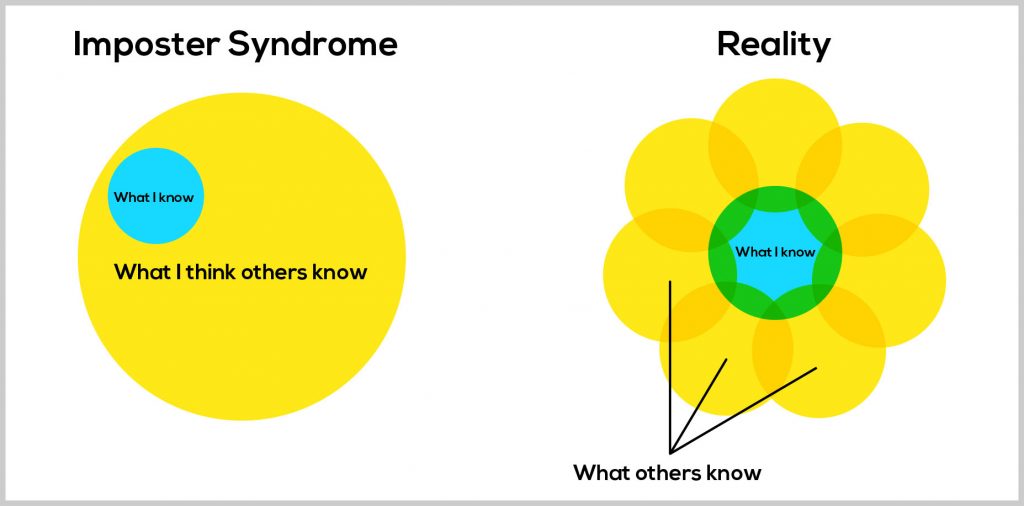
Imposter syndrome is simply the feeling that you are not as competent as people perceive you to be, hence you live with this fear of being exposed as a fraud or imposter. I like to believe at one point in our lives, we have or will experience this. It doesn’t in any way make you absurd or strange. It is characterized by a psychological pattern where you doubt your accomplishment. You eventually tend to attribute your success to luck or external factors.
People who develop this could be as result of varying factors; childhood experiences, environmental factors or who you surround yourself with, attaining a new job or promotion or handling a big task or project can contribute to it. Do you sometimes have self-doubt? Do you fear that you won’t live up to expectations? Are you unable to assess your competence and skills? Are you sensitive to constructive criticism? Do you downplay your talents? Do you make a fuss over your flaws? Do you fear you’ll be exposed as a fraud? Well I’m here to tell you that accepting these feelings is one step closer to passing the hurdle of Imposter syndrome. It is also typically believed that this syndrome is associated with high achievers, so it clearly means you are more capable than you think and you just need to conquer your fears and insecurities, which you will, with time and determination.
There are different types of Imposter syndrome as it can manifest in different ways.
The perfectionists set extremely high expectations for themselves and tend to magnify their flaws instead of their strengths thereby causing a great deal of anxiety.
The superheroes, as a result of their feeling of incompetence, push themselves to work harder than normal.
The experts are never satisfied with their level of expertise, hence they feel the need to learn every bit of information or take more training in order to learn more.
The natural genius, they are used to skills coming easily to them, but when feel the need to put extra effort or fail at their first attempt, it throws them off.
The soloists prefer to work alone, they see asking for help or assistance as an indication of being a failure or incompetent.
In order to overcome imposter syndrome you have to take baby steps. Don’t be so focused on doing things perfectly, rather, just aim to do it well and celebrate your little wins. Stop comparing yourself because everytime you do, you end up exalting another person at the expense of your self-worth. With the social media becoming a priority in the lives of many, it is important to use it moderately. After all, there’s more to what we see on the gram, so it’s not safe to be carried away or be lured into maintaining a perfect social image just to fit in. Sharing your feelings with trusted people and even better, a professional will go a long way. You would eventually realize that what you feel is in fact very normal and sharing it eases the burden on your shoulders.
Knowing other people have experienced Imposter syndrome and overcome it, makes it less scary. I’d like to emphasize again that these feelings are very normal. The important thing is not to let yourself get drowned by the fears and doubts. It’s okay to experience Imposter syndrome for a moment in your life, but certainly not for a lifetime.