By Glorious Olajire
Historians recall that the Nigeria we have today emerged on the canvas of history in the year 1914. While the precise place and signatories of the amalgamation document remain a subject of spirited debate among scholars and historians, there is no denying that this newly formed territory fell under the dominion of colonial masters, rather than the indigenous people for whom the new territory was purportedly formed. Thus, what followed was an arduous journey of struggle, resistance, and revolt by the indigenous populace, yearning to break free from the foreign yoke and reclaim their homeland.
The weight of these struggles was borne by remarkable sons of the soil, whose names echo through the annals of history: Chief Obafemi Awolowo, Dr. Nnamdi Azikwe, Sir Ahmadu Bello, Sir Tafawa Balewa, Chief Anthony Enahoro, and many more. Their collective efforts would eventually culminate in a moment of profound significance on October 1st, 1960, when Nigerians lowered the Union Jack and proudly hoisted the green-white-green Nigerian flag.
Every October 1st has since become a symbol of unity and the enduring existence of Nigeria. Yet, the passage of time has seen the country race through turbulent waters. From the harrowing, gun-rattling three years of civil war to the tumultuous periods of military rule, and now to the present experiment in democracy. Much has transpired on this journey, causing us to occasionally lose sight of our roots and the path ahead. Therefore, there is an imperative need for reflection.
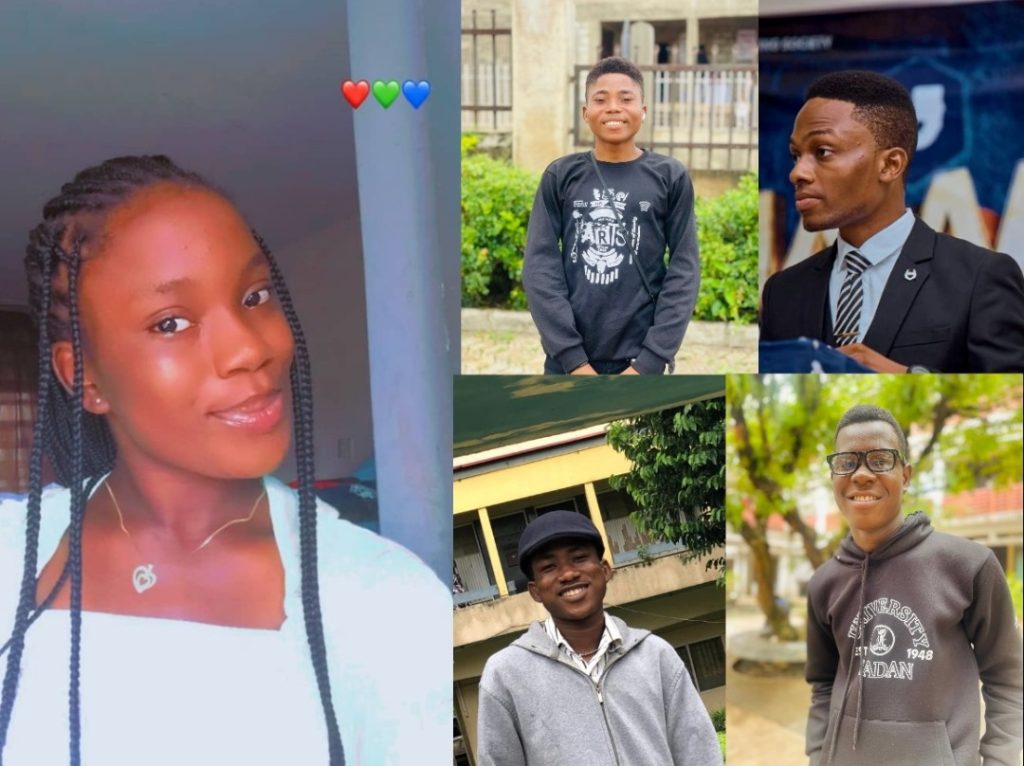
This reflection holds particular significance for students, who grapple with the dual challenges of being Nigerian and navigating the demanding academic curriculum. In the midst of these complexities, this piece puts together what University of Ibadan students think about the IndependenceDay: Is it merely a public holiday, or a solemn occasion for introspection?
Ogundele Damilare, a 200-level political science student of the faculty of the social sciences, believes that Independence Day is a moment for introspection – a time to evaluate one’s goals and compare them with achievements.
“Independence Day is a memorable day, a day for us to look back, and foresee the progress ahead. It is a day for us to guard up our lions. As usual, we have a lot to do as Nigerians, and we need our voices to be heard. So, it is a day for us to think and have a rethink. [Just like you] have a holiday after school [to] have a rethink of your academics, Independence Day is a cause to rethink and look back, [at] the previous year, [and to ask yourself] am I making progress as a Nigerian?”
Other students regard Independence Day as a day to celebrate freedom, a day to remember our separation from British dominance. One of such is Chineke Ugochukwu, a 400-level student of the Faculty of Law, who said: “Independence Day means a day where we come together as a nation, to celebrate that which is very dear to us, our freedom from the colonial masters. The very fact that we were able to fight for our freedom, shows to a great extent, the potential that Nigerians have inside of them and that we can stand up for what is right and can achieve everything we purpose to do.”
Speaking in similar terms, Wuraola Fasan, a student of ecotourism and wildlife management, Faculty of Renewable natural resources, chirped in thus, “It is just a day that Nigeria got Independence on October 1st, 1960. It is a day Nigeria gained its freedom.”
Kehinde Oziegbe, a student of Religious studies at the Faculty of Arts, added, “Independence Day means a day that our country Nigeria gained freedom from the British colonies, that we were able to stand alone. It is the day that Nigeria gained freedom from slavery and [we could say we can] stand on our own, we can do this on our own, we don’t need to rely on these people again”
Ogundijo Dolapo is another example of students who hold this view. He is a 200-level student of the Faculty of Education. For him, “Independence Day is a day, that Nigeria started self-government. It is like a liberation day.” But beyond being independence day, independence means something else to him as a student. As he lightly added, “It is a day of holiday, the day is on Sunday, so they gave us Monday. Monday is a very hectic day for me, so you can imagine my joy that .”omo, no class”, so I will just stay at home and sleep”
Another student, who does not want to be named, from the department of Biochemistry, Faculty of Science, shared the same “holiday” view as Dolapo. As this student puts it, ”Independence Day means holiday… I don’t really know much about Independence, since I was not part of our forefathers or ancestors, but from what I can say from what I have read, Independence Day is the day Nigeria was free from slavery and [a day for me to think] about the freedom that I have, and not being in slavery”
Oluwadara from the Faculty of Technology is more sceptical about Nigeria’s independence than excited. The excitement part of it is the opportunity it gives her to catch up on academic “backlogs.” In her own words, “October 1st, Independence Day in Nigeria, is a holiday for me—a day to catch up on backlogs. While I regard it as Independence Day, I don’t actively celebrate it. Instead, I tend to greet others. The reason I don’t really celebrate Independence Day is because it doesn’t feel like true freedom has been achieved in Nigeria.”
Ayomide, a student of clinical science in the College of Medicine, also thinks Independence Day is a day to relax. For her, “Independence Day is just like every other public holiday to me, [for me I], stay at home, enjoy myself, watch movies and the next day, we’ll go to class and that’s all.”
As we commemorate Nigeria’s 63rd independence anniversary, it beckons us to remember the enduring spirit of our nation’s youth who have, against formidable odds, tirelessly striven since 1st October, 1960. We must not forget the many questions that have tested our unity and sanity over the years. However, amid the turbulence, the inspiring stories of individuals like Tunde Onakoya and Iyinoluwa Aboyeji serve as beacons, illuminating the boundless potential that resides within us.
In these moments of reflection, it is incumbent upon us to ponder the true significance of Independence Day, particularly as students. Is it merely a day for reveling in freedom? A day to indulge in restful repose at home? An opportunity to catch up on or clear the backlog of academic work? Or is it a day for a deep reevaluation of our values and life paths? Does it hold a deeper, more personal significance for each of us?