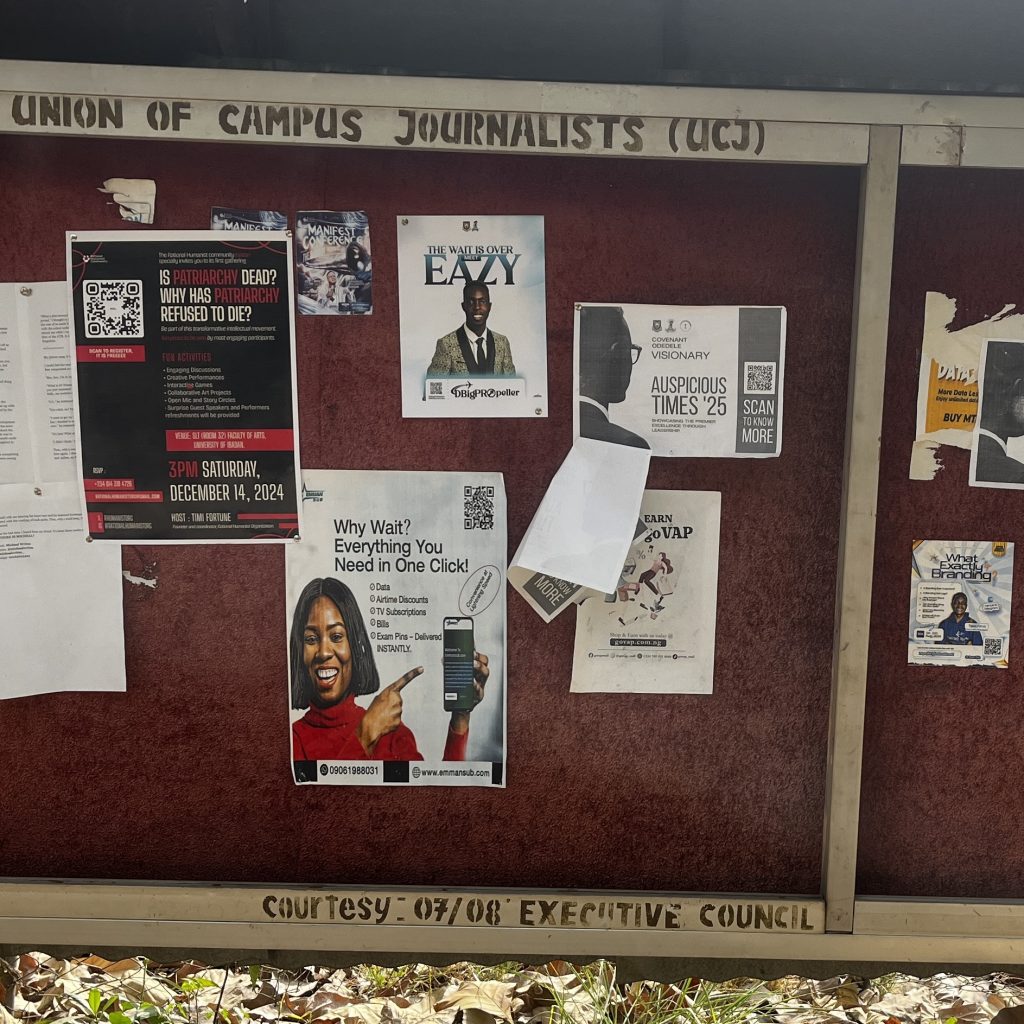
Leadership is not a title; it is a responsibility. It is not built on the debris of broken rules but founded on respect, integrity, and accountability. These principles are under threat as campus politics dimishes into a spectacle of disregard for institutional values. The issue at hand is not merely about campaign posters and defaced walls—it is about what this behavior reveals about the state of leadership, both on campus and in society at large.
The Student Handbook explicitly warns against defacing university property: “It is an offence to deface a university building in any way. The penalty ranges from reprimand to rustication for one semester and the repair of the damage done.” Yet, every election cycle sees this rule flagrantly violated, with campaign posters plastered on walls, tanks, trees, and even spaces like the UCJ Board. This habitual defiance raises critical questions: What does it say about our student leaders who ignore rules to achieve their aims? What does it also say about us, the electorate, when we tolerate such behavior?
A university is a microcosm of society, a place where future leaders are nurtured and societal norms shaped. However, the culture of respect and accountability is being eroded. The defacement of public property during election campaigns symbolizes more than aesthetic degradation; it reflects a systemic problem—a normalization of rule-breaking as a pathway to success.
When student leaders ignore the rules of their own community, they undermine these values. Worse, they set a precedent for future generations: that seeking power is more important than principle, and that ends justify means.
This issue mirrors the challenges faced by the larger Nigerian society. Across the nation, political actors have consistently prioritized self-interest over the common good. The misuse of public resources, the bending of rules to suit personal agendas, and the erosion of public trust have become hallmarks of governance. The actions of campus politicians at the University of Ibadan echo these broader societal trends.
If student leaders-in-training are already exhibiting the same tendencies as their national counterparts, what hope is there for transformative leadership in the future? The university is supposed to be a breeding ground for ethical and innovative leaders. When students who aspire to lead begin their journey by breaking the rules, they risk perpetuating the same cycles of corruption and inefficiency that have plagued the nation.
Leadership is about service, not selfish ambition. It is about building trust, fostering unity, and respecting the community one serves. True leaders inspire confidence through their actions, showing that they are willing to abide by the rules they expect others to follow.
The current campaign practices betray these principles. Defacing walls and ignoring institutional guidelines are not acts of leadership; they are acts of convenience. These behaviors send a clear message: that winning an election is more important than respecting the rules of the game. This mindset is dangerous because it undermines the very foundation of trust that leadership requires.
The erosion of leadership principles is not solely the fault of the candidates. The electorate, too, bears responsibility. Over time, there has been a noticeable decline in student engagement with campus politics. Many students now see elections as less important, something to endure rather than an opportunity to shape the future of their community.
This apathy creates a vacuum where poor leadership thrives. When students disengage, they fail to hold aspirants accountable. They allow rule-breaking and mediocrity to go unchallenged. If the electorate does not demand better from its leaders, it cannot expect better outcomes.
There is an urgent need to rethink how campaigns are conducted on campus. The current approach—characterized by generic broadcast messages, and spam—does not inspire confidence. Campaigning can and should be done ethically and creatively. Aspirants should focus on engaging with voters through meaningful dialogue, presenting clear and actionable plans for their tenure. They can organize town hall meetings, leverage digital platforms responsibly, and seek permission to place banners in designated areas. These practices not only show respect for the community but also demonstrate the aspirants’ ability to lead by example.
The university administration has a critical role to play in addressing this issue. Rules must be enforced consistently and fairly. Aspirants who deface public property should face consequences, not just to deter future violations but to reaffirm the importance of accountability. Hall and faculty administrators should collaborate with the Student Affairs Unit to ensure that campaign guidelines are respected.
Moreover, the administration should actively promote ethical campaign practices. This could include organizing workshops for aspirants on leadership ethics, providing designated spaces for campaign materials, and encouraging innovative ways to connect with voters.
The current crisis in campus politics is more than a symptom of youthful exuberance; it is a sign of a deeper malaise—an erosion of the values that should guide leadership on fragile foundations. As Wole Soyinka once wrote, “The man dies in all who keep silent in the face of tyranny.” The silence of our leaders, as they flout rules and disregard accountability, speaks volumes about the tyranny of self-interest over the common good—an echo of the broader political terrain of Nigeria.
In our nation, this same disregard for principles is mirrored in the wider political landscape. As politicians across the country engage in self-serving tactics—manipulating rules, bending regulations, and indulging in corruption—the message to our youth is clear: success is not built on the foundations of integrity, but on the ability to manipulate systems. The defacement of walls on university campuses, once symbolic of youthful rebellion, now reflects a deeper pattern of governance where the rules are broken to secure power, where the electorate’s voice is disregarded in favor of self-interest.
It is time for a reckoning, not just on our campuses, but across Nigeria’s political terrain. As we move forward, let us remember that true leadership—whether in the classroom, the student union, or the corridors of power—is not defined by who can shout the loudest or who can deface the most walls, but by who can listen, learn, and lead with respect, integrity, and accountability. The walls of our institutions should be monuments to these values, not canvas for political graffiti.