By: Victor Oginni
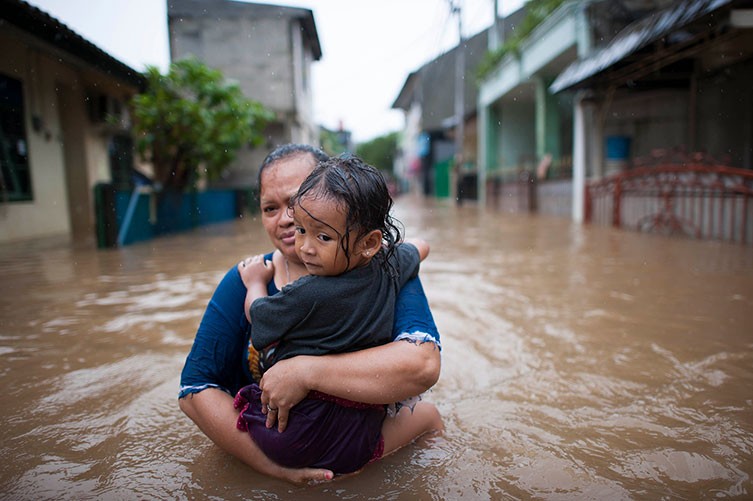
It is alarming to see how things degenerate from good to bad, from what it has always been to something monstrously different. In the past, we visit the rivers, not out of necessity but to have fun and relax. The coolness of the water refreshing our bodies. Those were the days when the Earth had a vibrant pulse, easily sustaining life. Today, necessity has replaced fun, our visits to the river are no longer for fun but a response to the rising temperature. We now visit to escape the grappling effects of the hot days. Strangely, the river has also changed, no longer as cool and refreshing as it was. It rejects our visits through its skin-piercing hot surface. We prayed for the rainy season to come, thinking it will be the only way out of this misery. Rainy season came but not as we know it, it came with heavy rainfall, flooding our homes, our farmlands and destroying our properties. It didn’t stop there; it came with extreme coldness. Now, the dry seasons are hotter and the rainy season colder. I thought, how can the earth be this wicked? Why the change? I searched for answers and I found them. The Earth is not malicious, it is only responding to the changes induced majorly by human actions. The Earth has not failed us, we are the ones failing the earth.
This is the experience of people and communities around the world. Climate change is evident by the obvious signs like increase in temperature and rainfall and the more subtle ones such as an increase in global sea level, ocean heating, ocean acidification, shrinking ice sheets, retreating glaciers, etc. The climatic conditions of the earth have always changed over millions and thousands of years; however, research has shown that recent changes have been drastic, resulting in devastating effects on the earth and its components.
According to the National Aeronautics and Space Agency (NASA), the average surface temperature of the Earth has risen by about 1.18 degrees Celsius since the late 19th century, with the seven most recent years being the warmest and the years 2016 and 2020 are tied to the hottest year on record. The oceans have also absorbed much of this heat, with the top 100 meters of the ocean showing warmth of more than 0.6 degrees. Ice sheets are also being melted as a result of increase in temperature (The Greenland and Antarctic ice sheets have decreased in mass. Data from NASA’s Gravity Recovery and Climate Experiment show Greenland lost an average of 279 billion tons of ice per year between 1993 and 2019, while Antarctica lost about 148 billion tons of ice per year), increasing sea level. Climate Change has also been evidenced by extreme weather events. A province in China recently experienced a year worth of rainfall in three days. Not far from home, intense rainfall in Lagos coastal areas resulted in heavy flooding. South-Eastern Europe has also experienced an extreme wave acclaimed to be one of the worse in history. All these are evidence of a drastic change in our climate.
Natural forces like volcanic eruptions, earthquakes and solar irradiance contribute to climate change, however, human activities are believed to be the primary cause of climate change. Scientists attribute the global warming trend to the human expansion of the greenhouse effect. In its Fifth Assessment Report, the Intergovernmental Panel on Climate Change, a group of 1,300 independent scientific experts from countries all over the world under the auspices of the United Nations, concluded there’s a more than 95 per cent probability that human activities over the past 50 years have warmed our planet. Greenhouse gases traps the ultraviolet radiation of the sun hereby heating the earth.
Human activities have contributed greatly to greenhouse gas emissions expanding the greenhouse effect that causes the change in the climate. Over the last century, the burning of fossil fuels like coal and oil has increased the concentration of atmospheric carbon dioxide (CO2). This happens because the coal or oil burning process combines carbon with oxygen in the air to make CO2. To a lesser extent, the clearing of land for agriculture, industry, and other human activities has increased concentrations of greenhouse gases. The industrial activities that our modern civilization depends upon have raised atmospheric carbon dioxide levels from 280 parts per million to 416 parts per million in the last 150 years. The panel also concluded there is more than 95 per cent probability that human-produced greenhouse gases such as carbon dioxide, methane and nitrous oxide have caused much of the observed increase in Earth’s temperatures over the past 50 years.
The effect of increasing greenhouse gas emissions includes an increase in earth surface temperature which result in likely increased precipitation and evaporation. However, this may vary from region to region (some may be wetter and some dryer). Climate change affects both the abiotic and biotic components of the Earth. Increasing temperature melts the ice sheet raising the sea level. Increase greenhouse gas emissions increase the acidity of oceans, affecting marine life. Climate change can result in a new pattern of pests and disease affecting plants, animals and humans, and raises a new threat to food security, safety and humans health. Flooding in coastal areas and drought in arid regions are possible effects of climate change.
BE EARTH’S HERO
The International Panel on Climate Change (IPCC) estimates that to mitigate the effect of climate change, the change in Earth’s surface temperature must not exceed 2°C. IPCC also estimates that Co2 concentration in the atmosphere must exceed 450 ppm to meet the 2°C goals of global warming or 430 ppm Ior 1.5°. However, the carbon dioxide emission is projected to reach 450 ppm by 2040. This sets the earth up for an extreme change that can adversely affect life on Earth. Here is where we all come in, we have constantly through our activities fail the earth and now we have a shot at redemption. Be the hero the Earth’s need at this time, to ensure our carbon dioxide emissions rate does not exceed the recommended goals by IPCC.
As individuals, our most important role in mitigating climate change is to reduce our carbon footprint. Carbon footprint is the total amount of greenhouse gases (including carbon dioxide and methane) that are generated by our actions. Many of our daily activities – such as using electricity, driving a car, or disposing of waste – cause greenhouse gas emissions. By lowering your carbon footprint, you can help contribute to the overall reduction of greenhouse gas emissions. In the fight against climate change, everyone making small changes can result in big result. It is not just about the environment either. Reducing your carbon footprint can also help you live a healthier lifestyle, as well as save you money. Whether it’s cleaner air, a healthier diet, or reduced energy bills, these benefits of reducing your carbon footprint also mean you’re doing your bit to combat climate change.
Reducing carbon footprint includes a wide range of change in our lifestyles, from diet to energy usage.
- Improve your diet
Animal products and processed food requires a lot of land, water and energy. They also generate methane, a greenhouse gas. To reduce your carbon footprint, eat more of plant products and less of animal products or processed food.
- Energy Usage
Switch to source of energy that are renewable like solar energy. Also conserve energy by making use of efficient electrical appliance, LED bulb over red lights. Also, minor activities like switching off electrical appliances when they are not in use energy consumption.
- Eliminate Single-use plastics
Single-Use plastics, though convenient are one of the earth’s polluters. They do not only pollute the earth, they require a lot of energy to produce and recycle. Stop using disposables, use materials that can easily be reused or recycled. Water bottle instead of bottled water.
- Transport
The transportation industry is only behind the energy industry in emissions of greenhouse gases. As individuals, walk or cycle more (this will not only reduce your carbon footprint, it will keep your body fit). When travelling, make use of public transport, this reduces the number of vehicles at a time thereby reducing emissions. If you need to get a car, get a fuel-efficient car. Embrace virtual programs. The carbon footprint of flying is larger than any other mode of transport. When you do fly, you should aim to reduce the number of stops on your route, ideally by flying directly to your destination.
- Offset your carbon emissions
This includes funding projects that are working towards fulfilling the climate action goal.
- Demand for government actions
Companies are responsible for most emissions, demand that the government make policies that will make companies reduce their carbon emission.
I woke up in the middle of the night to bed soaked with sweat. “arghh, this heat again” I grumbled. I sat up wondering if we will ever be free from the worsening temperature, not even a shower can reduce the effect. Unable to sleep, I logged in to Twitter, I was greeted by gory images of wildfire, Hurricane floods destroying cities, taking lives and properties with them. As if that was not enough, my timeline was filled with complaints about how food is now a luxury. The hot temperature makes it hard for plants to grow and even when rain falls, it is too intense and ends up destroying the crops. I shook my head and remember how it all started “The end is near; we failed the earth.” I said to myself.
That looks scary but it is what is going to happen to the Earth if we do not take action. It is projected that by 2030, the effects of climate change will be irreversible if actions are not taken. We may not have superpowers like the avengers but we can save the Earth and be the heroes the Earth needs. The world needs you and I to fight climate change. Take a pledge to fight climate change, have a lifestyle that will not hurt the earth. The Earth is crying out for help, be the Earth’s hero.
Victor Oginni, is a 300-level student of the department of Geology, University of Ibadan. He is also the Editor-in-Chief of Rockite Press Organization. Victor has a flair for writing and he is passionate about the Earth.