
By Adisa Habeeb
It is common among the Yorubas who on making grave mistakes seek absolution with the phrase “ise ésú ni” which loosely translates as “it is the handiwork of devil.”
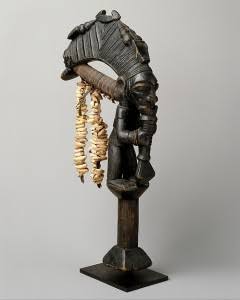
Ésú, in the Yoruba tradition, is the custodian of the primordial asé, embodies the principles of perspicacity and pragmatism that is crucial for the exercise of responsibility by sentient and thinking beings.
To refer to Ésú as devil or as Satan/Shaytan mentioned in the Bible/Quran will be a misinterpretation. Ésú is a messenger of the oracle, taking sacrifices to him and bringing his commands to men, acting under his orders and punishing the wicked for him. Ésú is an orisa(a god or a spirit), the four hundred supernatural powers of the Yoruba is often called four hundred and one, Ésú being the divinity at the top of the four hundred. He is regarded as one of the most powerful ‘orisa’, capable of changing his form at will.
Each odu (an odu Ifa is a chapter of Ifa); an immense volume of traditions consisting of 256 chapters; each odu contains from six hundred to eight hundred poems known as ésé Ifa, as many as 204,800 poems) is governed by its own Ésú. There are 256 different forms of existence that Ésú can assume. But Ésú is also a kinsman of the ‘Ajogun’, malevolent supernatural powers. He is able to do this by using a sacrifice provided by the would-be victim. When ésú presents the sacrifice to a warring Ajogun, the Ajogun allows his victim to go away unhurt. But if the would-be victim does not perform sacrifice, ésú is not in a position to help him.

Bishop Samuel Ajayi Crowther in 1867 explained that, “Ésú in Yoruba cosmology is not the devil or Satan as been and is being portrayed by Euro-Christian religious school of thought, Ésú in the authentic Yoruba concept is the enforcer of the will of Olodumare and not the equivalent of the Euro-Christian devil/Satan who is out to undermine the work God.”
We must therefore realize that the introduction or mixture of the Yoruba god into Christian theology, led to a misinterpretation of its functions in the Yoruba belief, leading many individuals to believe that the ‘aborisa’ traditionalists worshipping Ésú are worshippers of devil.
References
Dele Meiji -Ésú is not devil: How a Yoruba deity got rebranded.
Ésú and ethic in the Yoruba world view -Olasope .O. Oyelaran